


Hey there! Leave me a voicemail with any feedback or questions!
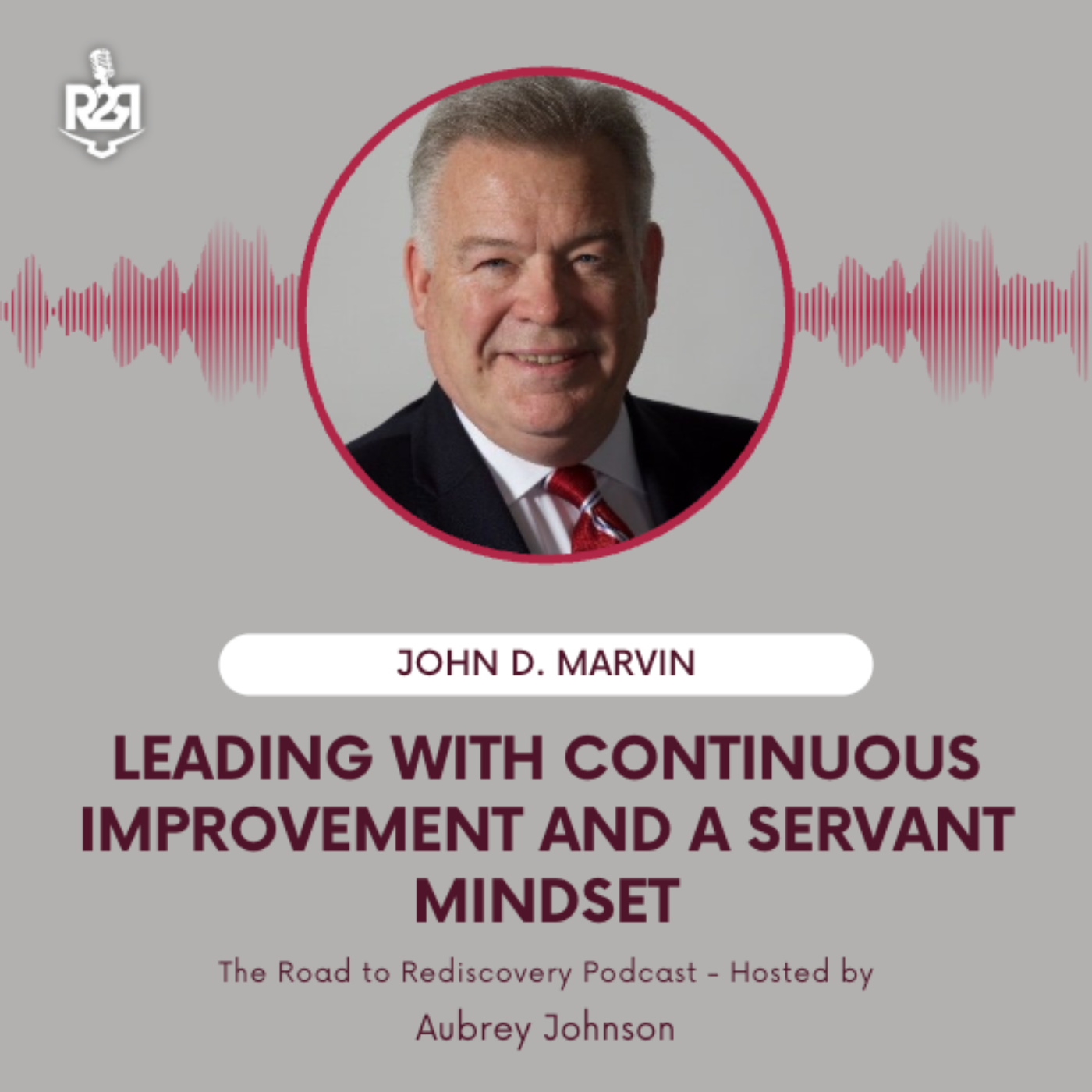
As the CEO and President of Texas State Optical (TSO) for over 20 years, and a leader in Continuous Improvement, John Marvin shares personal growth stories throughout his career,
John grew TSO into one of the top 10 retail optical organizations in the U.S., and was ready for the next chapter for him beyond TSO.
John also talks about the importance of building a culture for continuous improvement in both our professional and personal lives; as well as insight into the virtues of servant leadership.
You can follow John on LinkedIn to see and hear many more leadership insights!
If you like what you hear, buy me a coffee to support the show and get a shout-out in a future episode!
Show Notes
As the CEO and President of Texas State Optical (TSO) for over 20 years, John Marvin grew TSO into one of the top 10 retail optical organizations in the U.S.
Tune in, as John gives us a glimpse into his career, how he developed his leadership style, and the next chapter for him beyond TSO.
John also talks about the importance of building a culture for continuous improvement in both our professional and personal lives; as well as insight into the virtues of servant leadership.
You can follow John on LinkedIn to see and hear many more leadership insights!
If you like what you hear, buy me a coffee to support the show and get a shout-out in a future episode!
Show Transcript
Hey there, this is Brian grin author health coach and podcast host and you're listening to the road to rediscovery podcast with Aubrey Johnson Enjoy another great episode and have a great day Our lives are laid out on a road of bumps turns struggles and more. How do we respond? How do we endure adversity for learning and growth? I'm Aubrey Johnson and we'll explore these questions and more on the roads rediscovery Hello everyone and welcome to another episode of the road to rediscovery.
I'm your host Aubrey Johnson. The road to rediscovery is about reflected on life lessons to learn and grow from them. And of course, pay it forward and uplift others who are struggling through dark times. I'm happy to share that the official road to rediscovery Stan store is now officially open.
That's right. Inspired by this podcast and the insights from many amazing guests. We have all sorts of resources targeting your personal growth from free eGuides to eBooks to the full -blown rediscovery roadmap digital course. Get on the road to overcoming adversities and realizing your true potential by visiting us at stan .store slash road to rediscovery.
That's stan .store slash road the number two rediscovery. And we are always, always so, so grateful for your listenership. Okay, my special guest is the CEO and the president of Texas State Optical, or TSO. Over the past 20 years, he has grown TSO into one of the top 10 retail optical organizations in the U .S., providing eye care for more Texas families than any other provider.
Ladies and gentlemen, please help me welcome Mr. John D. Marvin. John, how are you?
It's so great to have you here. Well, it's great to be here. I've been looking forward to this. I love your show and I love the approach you take to helping people grow personally and reach their potential.
That's what I'm all about. I do need to say that since we talked last, there's an update and that is I have resigned from Texas State Optical. Is that right? After only five years I resigned in May 1st and my last day was June 30th.
So it doesn't take away from the years of of time that I spent there, actually a total of about 33 years altogether, but 25 as the president of the company. And I'm excited about what's going on for myself in the future and new chapters. Absolutely. I was just about to say that, John.
I mean, it's, you know, one chapter closes, another chapter opens. That's right. And you know what? I mean, we are never, we never get too old to...
reinvest in ourselves. We never get too old to reinvent ourselves or redefine ourselves. You know, I mean, we're not just defined by one part of our lives or one chapter, right? It's, it's, it's, it's a blend of so many things.
And, and, and the insights that you've gained and the insights that you've imparted over your 33 plus years, you know, in, in this organization and in ICARE, That is, that's a legacy. It's a true legacy in which the people who have learned and studied under, you know, your mentorship will continue to follow and impart on people that are coming up, you know, younger than them. So I believe congratulations are in order, John. And I'm excited for you as well as the next chapter.
And I am equally thankful for you clarifying and sharing this for the listeners in terms of where you are today. So this is great, John. And I would love if you could kind of help us unpack by giving us a glimpse into the early years of your journey that inspired you to pursue I care. Well, okay.
That'd be great. I think it's probably important to understand that I grew up in a family practice, private family practice, um, culture and household. My dad is a medical doctor, a family physician, and, uh, all, since I have any memory at all, he's had his own practice and, um, We grew up, I grew up in a small town in Western Kansas. And so he was one of two doctors in the town.
They were partners with each other. And, um, and my mother was the office manager. And so I kind of understand that small business, small private practice, um, like I said, culture, and it was always something I thought was great value to the patients, to the community. Um, extremely rewarding as a provider, my father, uh, loved what he did and loved the people he did it with.
And, um, but I knew that I wasn't called to be a doctor and I do believe that's a calling. Uh, so when I went to school, I decided that I would go into business and specifically study marketing. And, and I came out of school. I found myself working in the pharmaceutical industry first.
and then made the jump to medical practice where I was an administrator of a large surgical practice in Wichita, Kansas. And it was through that that I met another similar type practice in Houston and moved to my family to Houston, Texas in 1989 where I still live. And it was through that medical practice that I was first introduced to Texas State Optical and it was through a consumer research study because that was largely most of my role in this practice as well as I'd left there and started my own kind of management marketing management boutique business where I would do consumer research for different businesses. And one of them that I got hired by was Texas State Optical.
I did a two -year study, a couple of thousand interviews, a number of focus groups. And it was through that that I became intimately familiar with their business, their consumers, their customers, and ended up being retained by the franchisees. to help them form a franchise association. And that led to an interest on their part to buy the company in the late 90s.
They asked me to help them negotiate the acquisition, and I did. And about two thirds of the way through that, they said, if we're successful, would you be interested in coming on as the new president? And I said, I would. And then I...
Spent the next 25 years in that position. So and it was a great opportunity. It was a fixer -upper Yeah, I first became president we had a Small but an older organization because it had not it was losing its rather relevance TSO was founded in 1936. Oh, wow.
So next year it'll be 90 years old Yeah, and it but it had like many businesses if you aren't constantly reimagining and adjusting to market changes, then you can lose your relevance. And it was on the verge of that in the late 90s. And so I saw this as a tremendous opportunity to, like I said, it was a great fixer upper. And we started opening up new practices.
We opened about 83 new practices and brought the average age from the upper fifties down to the low forties. And just by bringing in young optometrists and they would want to own their own practice. And so it was great. But after a number of years, marketplace conditions change and opportunities change.
I just saw a different opportunity for me to go ahead and step down after that long of a run and begin the next chapter. So that's kind of how I got to where I am today, Aubrey. That's wonderful, John. And yeah, a wonderful run it has been, I am sure without a doubt.
And I love what you said earlier about, you know, with your father's practice as a doctor in West Kansas. I mean, we have like small town feel. You have your queue of customers, your queue of patients. Everyone knows you.
You're the guy in the town for general practice, for healing people, helping people feel better. And it's an incredible service to help sustain the health of others in that community. That's a great, great feel. I mean, and to me, it just strengthens the community overall.
Realizing what your path was going to be at a certain point when you're in college and everything, you know, knowing that it was a different path. And it's quite interesting that you say, you know, that it can be a calling when you realize You're not going to do something. I mean, usually a calling is associated with, uh, this is your calling to do this or to do that. But it also maybe you're calling to not do a certain thing.
Yeah, I knew that, um, uh, excuse me, I'm going to adjust this here because there we go. Better lighting there. I'm sorry about that. Uh, I knew that I didn't have the same kind of passion.
for patient care that my father had. First of all, I could have been because he set a pretty high bar and I just didn't feel that that was something, certainly over the years I've run into several family physicians that didn't come close to that bar. So I suppose I might've been able to do it but I always felt it was really important and he had always talked to me about do something you're passionate about, something you do feel. Yeah.
Called to do. Right. And, um, and I just was fascinated by the consumer behavior aspects of marketing. And, and so that, that really drew me in was one of those things that I knew that I could be passionate about, even if I didn't get paid for it, you know, I could just something that I really, really enjoyed understanding using and helping a business understand it.
how to move products or services into the hands of their customers. That makes a lot of sense, John. In the field of marketing and being fascinated with consumer behavior and so forth, it sounds like you have You've taken leadership to another level being more than just help guide people and make recommendations and and be there to support, you know teams and so forth, but also to be As they say have your ear on the ground right your thumb on the pulse of the Current condition right the climate One thing that's consistent in this world is change And with change, we're going to have to find ways to adapt, find ways to adjust as an organization, as a team, with the peaks and valleys, the ebbs and flows of just how the world is run. Things happen in this world.
It could be on a local scale, on a regional scale, on a national scale, on a global scale. And being cognizant of that change happening is, to me, it's part of an attribute of an effective leader. And so the next few questions I wanted to ask you is regarding the mindset of a leader, okay, and as well as effective leadership and virtues from leadership that can help and benefit us in our personal lives, if that's okay. Sure, sure.
Wonderful, wonderful. So, John, My first question is kind of like a point blank question. Okay. And I would love your insight on this.
Um, it's an age old question. I'm sure you've been asked this before, but just want to know your thoughts. Okay. Are leaders naturally born or raised or both?
I believe leadership has to be it's intentional. It's a set of skills that can be learned. And it has to be, the learning has to be intentional. And so I don't think that leaders are born.
I don't think anybody's born a leader. Um, I don't necessarily think that you're raised a leader other than you might have influences as you grow up that shape your mindset that open your, um, the right mindset will enable you to learn the skills. If you have a mentality that I'm no good in this or I'm no good with people or I'm no good with that, then it limits what you're willing to apply yourself to. And if you have a mindset that's open that says I can do anything I wanna do, I just have to learn the skills necessary to do it.
Right. And then that is the type of mindset that's necessary to, to develop into a influential leader. And I, I'm a student of John Maxwell and John Maxwell defines leadership as influence. And, um, and so, and I, I subscribe to that.
And so you've got to develop the skills. that would enable you to be influential and influential in a number of different ways. But one of them is helping others open up to their potential. And that's why I said I was looking forward to being here with you, because based on what I can tell, that's kind of what your podcast and your mission is, is to helping people discover.
kind of their own potential and how to develop personally and grow personally. And all of that is critical to developing leadership skills. And so that was just something that I decided years ago when I was first introduced to John Maxwell and started reading some of his material, which opened up, it was like opening a door to a shopping mall. where I was opening up to go to one store and I opened it up and I found 50 stores.
And so I began to learn from others and I created this whole group of what I call my mentors that I learned from. Some of them haven't been alive in a hundred years, but their writings are such that they were mentors to me. Sure. And so by learning that it was a decision that I made that I was going to intentionally become an influential leader.
And I wasn't thinking of it nationally, globally, even city -wide. I was thinking about it in terms of my sphere, my family, my community, my company, and the people that I had the privilege of working with. I was going to be a positive influence in those people's lives and practice that. Art of leadership.
Yes. Yes. No, that makes sense. And it's another perspective, too, that makes it more reasonable, more manageable, instead of feeling overwhelmed by going on a global scale of trying to be an effective leader, just dealing with your world, your sphere, as you mentioned, makes it more practical, more manageable, and everything.
So that makes a lot of sense. And I appreciate that clarification, John. In fact, I think you even touched on one of my next questions, which was some of the perspective differences that someone who is leader -oriented would have versus someone who's not. I heard you say that you have to have the open mind and be objective enough to believe you can.
and you can be a leader, you can take on these responsibilities. All you have to do is learn these skills versus someone who doesn't believe they could. That's an example, I guess, of a difference in perspective between someone who's leadership -oriented and someone who may not be as leadership -oriented. I want to thank you for that as well.
Strange question, but have you seen the movie? This is from I guess the mid to late 80s With Michael Douglas called Wall Street Yes, of course. Yeah. Yeah very good movie and and and I can't remember every single scene or or or you know line from the movie, but It looks like Michael Douglas's character He from the outside, he appeared to be a man of perfectionism and to be a perfectionist.
And so I want to ask you, what are your thoughts on some leaders out there who consider themselves as perfectionists and, I don't know, maybe even more so expect perfectionism from their teams. I mean, is this something reasonable or You know, when a leader leads with the concept of perfection, what's your thoughts on that? Interesting question, Aubrey, and interesting for a couple of ways. One, just in fact, it is quite interesting.
But just the other night, referencing another movie, I watched a documentary on Martha Stewart. Oh, yeah. And the documentary, the premise of it. was that she was a perfectionist, or she is a perfectionist, she's still alive.
And we weren't talking about a character, Gordon Gekko, as in the Elstree movie, we were talking about Martha. A real person. And you know, it forced me to kind of think about that as I was reacting to her person in that movie. And I came to believe, and I do believe this, that perfectionism comes from a core of insecurity in one's sense of value of themselves.
And the reason I say that is, is this pursuit of getting things absolutely perfect is a quest for approval. acceptance and it comes from feeling insecure inadequate I'm not good enough so I have to be perfect in this so that you will consider me acceptable and and I have to demand that out of others because if you work for me then you become an extension of me and my value and my worth. And so it's not enough that I just simply, I have to be perfect. I have to have everyone around me perfect as well because that is an extension of me.
And I, as I watched that documentary, I went through a number of emotions, but certainly one of them was I felt very sad for her because it was a, it was this unquenchable passion and desire that she had for acceptance. And I hate to characterize someone purely from one documentary that I watched on Netflix, but if you want to watch an interesting documentary, that certainly is one, it's called Martha. But assuming it's true to a large extent, she lives her whole life wanting to be accepted. by people and it gave some suggestions as to why that was that were based in her childhood with her father and her mother and her family life.
And so I really, there's a difference between working to be good at something, working to be excellent at something and being a perfectionist. Excellence is something that is an unending pursuit. performing at your own best, not so that you can get accepted or be accepted, but because you want to live up to your own standards, doing as good a job as you can. Speaking of mentors, Napoleon Hill is a mentor of mine.
I'm a student of Napoleon Hill. And he talks about, I was just reading this afternoon a little bit where he talks about going the extra mile. There's a principle he has of always delivering more than for which you're getting compensated. And that's just a belief in yourself that I'm here to provide value to Aubrey.
And so by going, doing everything I possibly can. to provide as much value as I possibly can, that's different than being a perfectionist. Yes, it is. Yeah.
There's just a difference. One is kind of a born out of insecurity and the other one is a passion for other people. And and I think that that marks the big difference. Yeah, I completely agree, John.
And I really love the way you articulated the association of perfectionism to acceptance, right? And it can be articulated anyway, whether we use an example of a documentary or not, but it clearly is relatable to anyone who listens when you explain that association of perfectionism and acceptance. And like you said, if a CEO's team or teams is an extension of him or herself, and they themselves are perfectionists. They pursue perfection.
They expect the same of their teams to pursue perfection as their extension. In my opinion, that can only lead to a reduction in engagement among the workforce. That engagement goes down. Another thing that is a little more practical that can truly and negatively impact engagement is, as we all know, change.
And so from a change management perspective, there are things that leaders must be privy to to help support their teams in navigating through that change cycle, whatever the change may be. you know, within an organization. So my question to you, John, is how can leadership support the workforce through a change cycle in a sufficient time while sustaining the business? OK, to regain that engagement from the workforce.
Well, I think one of the things that I've learned is to have a high performing team. And every president or CEO, regardless of whether you're. president of a small company with 25 or 30 employees or 250 to 300 employees. We all end up working with a small circle.
I referred to them as my leadership team. You have to break it down. And so to have the highest performing leadership team, I have to know those people. You know, I've always admired the college football coach that helps to mold and shape young men and women that go on to achieve great things in their sport, but also many times and often go on to achieve great things in the workplace or in business world afterwards.
And one of the things that coach has to do is he has to get into the living room of that young recruit. He has to meet mom or mom and dad. He has to get to know the brothers and the sisters, the athlete. And by doing so, he learns, she learns how to best provide that young athlete the type of guidance they need.
Because if I've got a leadership team of three or four people, they're all different. They respond to different motivations and incentives. And if I don't take the time, to get to know them. I'm not talking about being their best friend.
I'm talking about spending time learning what their dreams are. Why do they like this job? What is it they want out of this job? If all they want is I wanna put in my three to five so that I can use this to get a better job, I get it, that's fine.
A lot of people do that. And so it would behoove me if during that three to five that I've got that person I want to get the most value I can Then I want to understand what their motivation is it to be there and help them get the best three to five So that when they go out and move into a different position They know I've had a help. I've helped them and they don't end up with this Well, I'm here to take advantage of John and John's taken advantage of me Instead, it's John and I are working on the same plan together, and I understand what he needs for the next three to five, and he understands what I want in years six through 10. But I wouldn't know that unless I take the time to just break it down and say, what do you want to get out of this?
Because I'll help you get everything you want out of this. And obviously they want a paycheck, they've got families, but that's also very important. I mean, you've got to understand that motivation as well. And so I think that one of the ways that you get the most out of your team and you have the greatest influence in your leadership on that team is you take the time to listen to them, invest in them and understand them and then help them accomplish.
That college coach knows that I'm only gonna have you maybe five years at the most. So let's get the most out of it for both of us. So that when you're done here, you're on to bigger and better things. And I've always kind of taken that approach with people that work for me in the company as well.
Yeah, no, that truly resonates with me, John. I'm hearing two things here. Number one, with leaders having and should, take those steps to learn about their behaviors. What motivates them?
What elements of their family or what dynamics do they have that may be different from other players, other students? And what's their end goal? What's the end game for them? And trying to understand those things so that, number one, it's you're not insensitive to that.
And it doesn't seem so transactional, right? We don't want it to be transactional. We want this to be an opportunity to grow and flourish to where both sides benefit, the coach and the player. And yeah, and then there's a sense of servant leadership in which you follow as an effective leader to support and help that person get what they're looking for out of this.
You know, as they're adding value, they're getting value back with your support and getting them where they want to be, wherever that end game is. And so, you know, um, uh, it's, it may be a long -term transaction, but it's not transactional from an insensitive standpoint, I guess is what I'm trying to say. And there's a third, um, stakeholder in all of this. There's the employee.
There is myself, and then there's the team, there's the company. And so all three have to get value out of this relationship. And it is a relationship, hopefully a long -term relationship. And part of what I really make an effort to do is to sit with someone and go, basically, what is it going to take for me to keep you here a long time?
Because the longer you're in this position with this company or with this company, you're going to become of more value to yourself. Yes. To me and to the company. Yes.
And so what is it that I'm going to need to do to provide you with whatever incentives, whether they be money, but rarely it's, is it just money? Right. It's usually opportunity and it's usually opportunity to grow, you know, after spending 10 years with you, John, I want to be better at what I'm doing. and better in my area of responsibilities than I was when I started.
And I want you to help me develop that capability. And then the other thing, things change. So you can sit down in January and have this good old fashioned talk. And then by October, things could be different.
So you've got to constantly keep that relationship. going and it can't be done in just, okay, we're going to meet once a month for 30 minutes and we'll talk. No, it's got to be a, every day, every week, every month, touch and how are you doing? Everything okay.
I get to know people well enough. I can tell when they're out of rhythm, you know, something's not right. So tell me what's going on. Yes.
Yes. That type of relationship is critical to have a high performing team. And it, it is not difficult to do, but it has to be intentional. Yes.
And if it's not intentional, it'll never get done. And certainly part of it is, um, recognizing being my own self aware of the fact that I'm not real perfect at any of this. I'm just me and, and, you know, and letting them. See a little bit of that vulnerability.
So they recognize that I'm not authoritarian at all in my style or approach to them, but I'm more coach. I'm like a coach. Gotcha. And all I ask of them is to be coachable.
Right. No. Um, and, and, and, and that's not much to ask. I mean, in the role that you're, you're playing as a coach, um, and you know, and, and, and, and a lot of, a lot of workers.
a lot of students, a lot of athletes, they want to be coached because they want to grow to your point earlier. And John, I have been really enjoying this part of our conversation has involved a journey from talking about and sharing insights on disengagement. such as perfection and dealing with change. Then we've talked about engagement, right?
In ways to help connect with a worker, help connect with a student or an athlete and understand what makes them tick and asking them, showing them your vulnerability and how can I support you? Tell me how I can support you better in where you want to go. you know, since you've been here this length of time. So and it shows that you're human, right?
You're not sitting on an ivory tower barking commands. You're you're right there in the trench with them saying we're going to get through this together. And that's that's critically, critically important, as you said, to to establishing these relationships and being intentional. One thing I had to say there.
Yeah, being intentional. I think workers See and feel that okay based on your authenticity and it has to be in your heart in order to be truly intentional If it's taken at face value and and and and just trying to check the boxes Don't you think workers or students or athletes would kind of see through that in the leader? Oh Absolutely. I mean the thing that people we tell ourselves is that we can fake it till we make it.
Yeah. Probably heard that. Yes. And, and I'm a believer that people can smell in authenticity a mile away.
Oh, sure. For sure. Yeah. For sure.
If you can't, if you're not comfortable enough with yourself to be authentic, then that's your first job is to get comfortable with yourself. So you can be authentic. Otherwise, you're not going to go very far. You're not going to have a happy marriage.
You're not going to be a good parent. You can't be a good teacher in the classroom. You've got to be yourself. You've got to be authentic.
The idea of trying to be something you're not because you believe everyone expects it is a perspective of failure. It just won't deliver. No, it won't deliver. And having that authenticity to be intentional definitely has to be there.
And for us to kind of tie a bow here on engagement, right? And one thing you mentioned earlier, right? If you're not being intentional and you're not authentic, it's going to kind of have an impact on every facet of your life, right? You can't really be an effective partner or spouse or parent or worker, you know, whether it's a professional life or personal life.
I wanted to ask you, at least in the company that I work in, at least, you know, we are we champion instead of perfectionism. one of the phrases we say is never best, only better, right? So with continuous improvement, we always want to kaizen, we want to grow, we look for ways to continuously improve. Problems are never a really, really bad thing.
It's often given a negative connotation when really it's an opportunity to improve a process. or something that can get us a little better than we were before. And then, of course, standardizing those processes. And so with continuous improvement being more practical, more reasonable, more attainable for teens to reach versus perfectionism, what are some of the virtues from practicing continuous improvement that workers can learn and embrace in the job, in the workplace, that they can actually carry with them to improve facets of their personal life.
Well, I think an understanding of continual learning, being a student for life is something that I believe you have to be awakened to. I was fortunate in the fact that I had a sophomore high school English teacher that helped me see the virtues and the value of continual learning, continual learning. And gave me a real passion for reading because of what it opened up in terms of an opportunity to learn. In fact, I've got a book on my bookshelf titled Kaizen by the Japanese professor.
Oh, really? Wrote one of the kind of manuals on the concept in the 1980s, 70s and 80s when Japan was held up as kind of the model of continual improvement or quality management. Right, right. I was fortunate enough to go through a whole series of educational courses in that concept.
had I not had that sophomore English teacher not shown me the beauty and the empower and importance of reading and what it kind of introduced me to that continual learning, then I probably wouldn't have taken as much from that process as I did. And I became not just a student of that, but a believer. in, in continual improvement. Yes.
And, and getting all the stakeholders around the table to review the process, improve the process and turn it into a reliable method. Yes. And then continually challenging that method every day. How can we make this better?
And it's a culture and it's a belief system that if it's, if it's implemented in the workplace, then people cannot help but adapt it for a life system, their own life belief system. And so by understanding that, then they take it home. And instead of arguing constantly with a spouse, they'll begin to wonder, how can I be better so that our marriage is better? How can I be better so that my children are better?
How can I be better so that my company is better? And knowing and recognizing that organizations, relationships, marriages, households are simply a collection of people. And, and the only person I got control over is myself. That's it.
So if I try to fix everybody else in the organization, but I don't start with myself. then all I'm going to do is have a short time and whatever that organization is, including my marriage. Yeah. You know, if I spend all my time trying to fix my wife, then I'm not going to have a wife very long, right?
No, but if I spend my time fixing me, yes, I'll probably be amazed at what a wonderful wife I have. Oh, totally. Yeah. I mean, and this, this is less finger pointing, more accountability.
That's exactly right. Right. Absolutely. And that's probably the biggest value that employees and team members can benefit from as a result of a culture of continual improvement is understanding that starts with them.
Yes. Yes. And that's huge. And that's part of the importance of building a culture.
in a workplace of continuous improvement and getting that buy -in, right? Getting the buy -in from them, then it shows in their work. It shows in their behavior. It shows in how they interact with each other.
And to me, there's a true element of humility that's involved with that type of mindset as well. So... It requires, Aubrey, that... I go back to that conversation that I said I set people down and I want to understand what do you want to get out of this?
Yeah, part of that. Part of that is understanding what do you want to become really good at? Yes. And what what area of your life?
You know, it doesn't matter. Just pick anything you want. If it's John, I've always wanted to be a better cook. All right.
But let's talk about it because it becomes kind of an archetype and role model of how you improve yourself. And so if you can do what you need to do to be a better cook or be a good cook, then you begin to learn the skills necessary to be really good in other areas of your life. And so a part of our performance review is requiring people to have a personal growth plan for themselves. Now, I don't dictate what it is, but they have to sit down and reflect on what it is they want to improve in.
And then I will help them. And if it means buying them a book, I'll buy them a book. If it means going to a course, we'll go to a course. I'll do whatever is necessary to support them in their own.
Personal growth and when they can see that the person they work for is really interested in helping them become a better person without with more skills Then they they value that and it forms the foundation of a relationship That has trust in it. And if you don't have trust You're not gonna get anything done. No No, you you surely aren't and and and there's a there's a there's a class that I teach along with some of my colleagues. It's called the speed of trust.
Stephen Covey. Yeah. It does talk about companies, they can actually run slow or even stall when there isn't the appropriate trust amongst the leaders and the team members that it should be. uh yeah it truly spells spells that spells that out for sure and in that example you just gave there again john your your your your your flashes of servant leadership is shining through you i can see it like an aura uh yeah the servant leadership and how you want to support them in their growth You gave the first example as the coach to the recruit.
You gave this example here as the leader to the team member. And for you to so eloquently articulate these examples has got to come genuinely from your leadership style. So, John, this has been. an absolutely lovely conversation, sir.
And I would love to ask you for the listener's benefit, how can they connect with you? How can they learn more about the great work that you're doing when it comes to leadership? Well, Aubrey, as I mentioned in the kind of the outset, I left Texas State Optical and I'm no longer at that company. So I'm in the process of forming you know, putting up the company that I have had in the back of my mind for a while and kind of understood that I believe this is the calling this next chapter.
And for right now, the best place to connect with me is in LinkedIn. Okay. Just look up my name, John D. Marvin.
I use my middle initial for on LinkedIn, then you'll find me and send me a note. I'd be happy to either correspond with you, via that way. I'll give you my email at that point. And if it's something you're interested in, I'll even get on a phone call with somebody and we'll just talk.
We'll just share experiences. I'll learn. Hopefully I can be of value. And I'd be happy to help as many people in your audience as I could.
But that's kind of the best way to start with, is find me there. Okay, I tell you what we're gonna go ahead and start with that John we're gonna have your LinkedIn URL and link in the episode show notes so the listeners can connect with you on LinkedIn I'm going to connect with you on LinkedIn and And and and my listener base and my listenership We're gonna watch as you plant this seed in your next chapter Okay to see what blossoms what grows what flourishes Right? Because I know there'll be an abundance of other connection opportunities and what you put together for listeners and people looking for ways to improve themselves to grow and to become effective leaders. So, John, we'll have that in the episode show notes.
They'll click that and connect with you while listening to this wonderful conversation. John D. Marvin. I can't thank you enough for coming on the show, sharing your insights.
I hope I truly genuinely hope we can stay in touch and bring you on the show in the future. Once you get this stood up. I would love that. I really appreciate it.
And like I said, I just was so impressed with the commitment of the whole purpose of the podcast. And I look forward to following you and watching your success too, because I'm confident that that will continue to grow. Well, I truly appreciate your thoughtfulness, John. I really do.
And yes, I'm all about community, right? I play a part in a community and to help grow a community. So I think we're all in this together. I think we only become stronger when we come together.
So John, thank you once again for coming on the show, sir. Greatly greatly appreciate it My pleasure. Thank you. All right, and I want to thank all of you for tuning in and hey look You may feel like this way at times but in our daily struggles and adversities You're never alone and hope is always around the corner I humbly ask that you please share this show with someone, you know someone you love who needs motivation inspiration and support And you know, when it all comes down to it, we're all just roadies on this journey of life.
But it sure feels good having you on the road with me. Thanks again for listening. We'll chat again soon. We really hope you enjoyed this episode of the Rhodes Rediscovery.
We'd love to hear from you. Shoot us an email at RhodesRediscoveryPodcast at gmail .com and leave us any questions or comments you may have.
Listen On
Also In Season 11
-

Teaching Women how to Reclaim their Voice - Gina Hatzis
Hey there! Leave me a voicemail with any feedback or questions!Gina Hatzis is a -

Behind the Scenes of Success
Hey there! Leave me a voicemail with any feedback or questions!In an outcome, r -
Transforming Bad Habits to Optimized Living Wealth, with Jack Landry
Hey there! Leave me a voicemail with any feedback or questions!After reaching a
Transcript
Hey there, this is Brian grin author health coach and podcast host and you're listening to the road to rediscovery podcast with Aubrey Johnson Enjoy another great episode and have a great day Our lives are laid out on a road of bumps turns struggles and more. How do we respond? How do we endure adversity for learning and growth? I'm Aubrey Johnson and we'll explore these questions and more on the roads rediscovery Hello everyone and welcome to another episode of the road to rediscovery.
I'm your host Aubrey Johnson. The road to rediscovery is about reflected on life lessons to learn and grow from them. And of course, pay it forward and uplift others who are struggling through dark times. I'm happy to share that the official road to rediscovery Stan store is now officially open.
That's right. Inspired by this podcast and the insights from many amazing guests. We have all sorts of resources targeting your personal growth from free eGuides to eBooks to the full -blown rediscovery roadmap digital course. Get on the road to overcoming adversities and realizing your true potential by visiting us at stan .store slash road to rediscovery.
That's stan .store slash road the number two rediscovery. And we are always, always so, so grateful for your listenership. Okay, my special guest is the CEO and the president of Texas State Optical, or TSO. Over the past 20 years, he has grown TSO into one of the top 10 retail optical organizations in the U .S., providing eye care for more Texas families than any other provider.
Ladies and gentlemen, please help me welcome Mr. John D. Marvin. John, how are you?
It's so great to have you here. Well, it's great to be here. I've been looking forward to this. I love your show and I love the approach you take to helping people grow personally and reach their potential.
That's what I'm all about. I do need to say that since we talked last, there's an update and that is I have resigned from Texas State Optical. Is that right? After only five years I resigned in May 1st and my last day was June 30th.
So it doesn't take away from the years of of time that I spent there, actually a total of about 33 years altogether, but 25 as the president of the company. And I'm excited about what's going on for myself in the future and new chapters. Absolutely. I was just about to say that, John.
I mean, it's, you know, one chapter closes, another chapter opens. That's right. And you know what? I mean, we are never, we never get too old to...
reinvest in ourselves. We never get too old to reinvent ourselves or redefine ourselves. You know, I mean, we're not just defined by one part of our lives or one chapter, right? It's, it's, it's, it's a blend of so many things.
And, and, and the insights that you've gained and the insights that you've imparted over your 33 plus years, you know, in, in this organization and in ICARE, That is, that's a legacy. It's a true legacy in which the people who have learned and studied under, you know, your mentorship will continue to follow and impart on people that are coming up, you know, younger than them. So I believe congratulations are in order, John. And I'm excited for you as well as the next chapter.
And I am equally thankful for you clarifying and sharing this for the listeners in terms of where you are today. So this is great, John. And I would love if you could kind of help us unpack by giving us a glimpse into the early years of your journey that inspired you to pursue I care. Well, okay.
That'd be great. I think it's probably important to understand that I grew up in a family practice, private family practice, um, culture and household. My dad is a medical doctor, a family physician, and, uh, all, since I have any memory at all, he's had his own practice and, um, We grew up, I grew up in a small town in Western Kansas. And so he was one of two doctors in the town.
They were partners with each other. And, um, and my mother was the office manager. And so I kind of understand that small business, small private practice, um, like I said, culture, and it was always something I thought was great value to the patients, to the community. Um, extremely rewarding as a provider, my father, uh, loved what he did and loved the people he did it with.
And, um, but I knew that I wasn't called to be a doctor and I do believe that's a calling. Uh, so when I went to school, I decided that I would go into business and specifically study marketing. And, and I came out of school. I found myself working in the pharmaceutical industry first.
and then made the jump to medical practice where I was an administrator of a large surgical practice in Wichita, Kansas. And it was through that that I met another similar type practice in Houston and moved to my family to Houston, Texas in 1989 where I still live. And it was through that medical practice that I was first introduced to Texas State Optical and it was through a consumer research study because that was largely most of my role in this practice as well as I'd left there and started my own kind of management marketing management boutique business where I would do consumer research for different businesses. And one of them that I got hired by was Texas State Optical.
I did a two -year study, a couple of thousand interviews, a number of focus groups. And it was through that that I became intimately familiar with their business, their consumers, their customers, and ended up being retained by the franchisees. to help them form a franchise association. And that led to an interest on their part to buy the company in the late 90s.
They asked me to help them negotiate the acquisition, and I did. And about two thirds of the way through that, they said, if we're successful, would you be interested in coming on as the new president? And I said, I would. And then I...
Spent the next 25 years in that position. So and it was a great opportunity. It was a fixer -upper Yeah, I first became president we had a Small but an older organization because it had not it was losing its rather relevance TSO was founded in 1936. Oh, wow.
So next year it'll be 90 years old Yeah, and it but it had like many businesses if you aren't constantly reimagining and adjusting to market changes, then you can lose your relevance. And it was on the verge of that in the late 90s. And so I saw this as a tremendous opportunity to, like I said, it was a great fixer upper. And we started opening up new practices.
We opened about 83 new practices and brought the average age from the upper fifties down to the low forties. And just by bringing in young optometrists and they would want to own their own practice. And so it was great. But after a number of years, marketplace conditions change and opportunities change.
I just saw a different opportunity for me to go ahead and step down after that long of a run and begin the next chapter. So that's kind of how I got to where I am today, Aubrey. That's wonderful, John. And yeah, a wonderful run it has been, I am sure without a doubt.
And I love what you said earlier about, you know, with your father's practice as a doctor in West Kansas. I mean, we have like small town feel. You have your queue of customers, your queue of patients. Everyone knows you.
You're the guy in the town for general practice, for healing people, helping people feel better. And it's an incredible service to help sustain the health of others in that community. That's a great, great feel. I mean, and to me, it just strengthens the community overall.
Realizing what your path was going to be at a certain point when you're in college and everything, you know, knowing that it was a different path. And it's quite interesting that you say, you know, that it can be a calling when you realize You're not going to do something. I mean, usually a calling is associated with, uh, this is your calling to do this or to do that. But it also maybe you're calling to not do a certain thing.
Yeah, I knew that, um, uh, excuse me, I'm going to adjust this here because there we go. Better lighting there. I'm sorry about that. Uh, I knew that I didn't have the same kind of passion.
for patient care that my father had. First of all, I could have been because he set a pretty high bar and I just didn't feel that that was something, certainly over the years I've run into several family physicians that didn't come close to that bar. So I suppose I might've been able to do it but I always felt it was really important and he had always talked to me about do something you're passionate about, something you do feel. Yeah.
Called to do. Right. And, um, and I just was fascinated by the consumer behavior aspects of marketing. And, and so that, that really drew me in was one of those things that I knew that I could be passionate about, even if I didn't get paid for it, you know, I could just something that I really, really enjoyed understanding using and helping a business understand it.
how to move products or services into the hands of their customers. That makes a lot of sense, John. In the field of marketing and being fascinated with consumer behavior and so forth, it sounds like you have You've taken leadership to another level being more than just help guide people and make recommendations and and be there to support, you know teams and so forth, but also to be As they say have your ear on the ground right your thumb on the pulse of the Current condition right the climate One thing that's consistent in this world is change And with change, we're going to have to find ways to adapt, find ways to adjust as an organization, as a team, with the peaks and valleys, the ebbs and flows of just how the world is run. Things happen in this world.
It could be on a local scale, on a regional scale, on a national scale, on a global scale. And being cognizant of that change happening is, to me, it's part of an attribute of an effective leader. And so the next few questions I wanted to ask you is regarding the mindset of a leader, okay, and as well as effective leadership and virtues from leadership that can help and benefit us in our personal lives, if that's okay. Sure, sure.
Wonderful, wonderful. So, John, My first question is kind of like a point blank question. Okay. And I would love your insight on this.
Um, it's an age old question. I'm sure you've been asked this before, but just want to know your thoughts. Okay. Are leaders naturally born or raised or both?
I believe leadership has to be it's intentional. It's a set of skills that can be learned. And it has to be, the learning has to be intentional. And so I don't think that leaders are born.
I don't think anybody's born a leader. Um, I don't necessarily think that you're raised a leader other than you might have influences as you grow up that shape your mindset that open your, um, the right mindset will enable you to learn the skills. If you have a mentality that I'm no good in this or I'm no good with people or I'm no good with that, then it limits what you're willing to apply yourself to. And if you have a mindset that's open that says I can do anything I wanna do, I just have to learn the skills necessary to do it.
Right. And then that is the type of mindset that's necessary to, to develop into a influential leader. And I, I'm a student of John Maxwell and John Maxwell defines leadership as influence. And, um, and so, and I, I subscribe to that.
And so you've got to develop the skills. that would enable you to be influential and influential in a number of different ways. But one of them is helping others open up to their potential. And that's why I said I was looking forward to being here with you, because based on what I can tell, that's kind of what your podcast and your mission is, is to helping people discover.
kind of their own potential and how to develop personally and grow personally. And all of that is critical to developing leadership skills. And so that was just something that I decided years ago when I was first introduced to John Maxwell and started reading some of his material, which opened up, it was like opening a door to a shopping mall. where I was opening up to go to one store and I opened it up and I found 50 stores.
And so I began to learn from others and I created this whole group of what I call my mentors that I learned from. Some of them haven't been alive in a hundred years, but their writings are such that they were mentors to me. Sure. And so by learning that it was a decision that I made that I was going to intentionally become an influential leader.
And I wasn't thinking of it nationally, globally, even city -wide. I was thinking about it in terms of my sphere, my family, my community, my company, and the people that I had the privilege of working with. I was going to be a positive influence in those people's lives and practice that. Art of leadership.
Yes. Yes. No, that makes sense. And it's another perspective, too, that makes it more reasonable, more manageable, instead of feeling overwhelmed by going on a global scale of trying to be an effective leader, just dealing with your world, your sphere, as you mentioned, makes it more practical, more manageable, and everything.
So that makes a lot of sense. And I appreciate that clarification, John. In fact, I think you even touched on one of my next questions, which was some of the perspective differences that someone who is leader -oriented would have versus someone who's not. I heard you say that you have to have the open mind and be objective enough to believe you can.
and you can be a leader, you can take on these responsibilities. All you have to do is learn these skills versus someone who doesn't believe they could. That's an example, I guess, of a difference in perspective between someone who's leadership -oriented and someone who may not be as leadership -oriented. I want to thank you for that as well.
Strange question, but have you seen the movie? This is from I guess the mid to late 80s With Michael Douglas called Wall Street Yes, of course. Yeah. Yeah very good movie and and and I can't remember every single scene or or or you know line from the movie, but It looks like Michael Douglas's character He from the outside, he appeared to be a man of perfectionism and to be a perfectionist.
And so I want to ask you, what are your thoughts on some leaders out there who consider themselves as perfectionists and, I don't know, maybe even more so expect perfectionism from their teams. I mean, is this something reasonable or You know, when a leader leads with the concept of perfection, what's your thoughts on that? Interesting question, Aubrey, and interesting for a couple of ways. One, just in fact, it is quite interesting.
But just the other night, referencing another movie, I watched a documentary on Martha Stewart. Oh, yeah. And the documentary, the premise of it. was that she was a perfectionist, or she is a perfectionist, she's still alive.
And we weren't talking about a character, Gordon Gekko, as in the Elstree movie, we were talking about Martha. A real person. And you know, it forced me to kind of think about that as I was reacting to her person in that movie. And I came to believe, and I do believe this, that perfectionism comes from a core of insecurity in one's sense of value of themselves.
And the reason I say that is, is this pursuit of getting things absolutely perfect is a quest for approval. acceptance and it comes from feeling insecure inadequate I'm not good enough so I have to be perfect in this so that you will consider me acceptable and and I have to demand that out of others because if you work for me then you become an extension of me and my value and my worth. And so it's not enough that I just simply, I have to be perfect. I have to have everyone around me perfect as well because that is an extension of me.
And I, as I watched that documentary, I went through a number of emotions, but certainly one of them was I felt very sad for her because it was a, it was this unquenchable passion and desire that she had for acceptance. And I hate to characterize someone purely from one documentary that I watched on Netflix, but if you want to watch an interesting documentary, that certainly is one, it's called Martha. But assuming it's true to a large extent, she lives her whole life wanting to be accepted. by people and it gave some suggestions as to why that was that were based in her childhood with her father and her mother and her family life.
And so I really, there's a difference between working to be good at something, working to be excellent at something and being a perfectionist. Excellence is something that is an unending pursuit. performing at your own best, not so that you can get accepted or be accepted, but because you want to live up to your own standards, doing as good a job as you can. Speaking of mentors, Napoleon Hill is a mentor of mine.
I'm a student of Napoleon Hill. And he talks about, I was just reading this afternoon a little bit where he talks about going the extra mile. There's a principle he has of always delivering more than for which you're getting compensated. And that's just a belief in yourself that I'm here to provide value to Aubrey.
And so by going, doing everything I possibly can. to provide as much value as I possibly can, that's different than being a perfectionist. Yes, it is. Yeah.
There's just a difference. One is kind of a born out of insecurity and the other one is a passion for other people. And and I think that that marks the big difference. Yeah, I completely agree, John.
And I really love the way you articulated the association of perfectionism to acceptance, right? And it can be articulated anyway, whether we use an example of a documentary or not, but it clearly is relatable to anyone who listens when you explain that association of perfectionism and acceptance. And like you said, if a CEO's team or teams is an extension of him or herself, and they themselves are perfectionists. They pursue perfection.
They expect the same of their teams to pursue perfection as their extension. In my opinion, that can only lead to a reduction in engagement among the workforce. That engagement goes down. Another thing that is a little more practical that can truly and negatively impact engagement is, as we all know, change.
And so from a change management perspective, there are things that leaders must be privy to to help support their teams in navigating through that change cycle, whatever the change may be. you know, within an organization. So my question to you, John, is how can leadership support the workforce through a change cycle in a sufficient time while sustaining the business? OK, to regain that engagement from the workforce.
Well, I think one of the things that I've learned is to have a high performing team. And every president or CEO, regardless of whether you're. president of a small company with 25 or 30 employees or 250 to 300 employees. We all end up working with a small circle.
I referred to them as my leadership team. You have to break it down. And so to have the highest performing leadership team, I have to know those people. You know, I've always admired the college football coach that helps to mold and shape young men and women that go on to achieve great things in their sport, but also many times and often go on to achieve great things in the workplace or in business world afterwards.
And one of the things that coach has to do is he has to get into the living room of that young recruit. He has to meet mom or mom and dad. He has to get to know the brothers and the sisters, the athlete. And by doing so, he learns, she learns how to best provide that young athlete the type of guidance they need.
Because if I've got a leadership team of three or four people, they're all different. They respond to different motivations and incentives. And if I don't take the time, to get to know them. I'm not talking about being their best friend.
I'm talking about spending time learning what their dreams are. Why do they like this job? What is it they want out of this job? If all they want is I wanna put in my three to five so that I can use this to get a better job, I get it, that's fine.
A lot of people do that. And so it would behoove me if during that three to five that I've got that person I want to get the most value I can Then I want to understand what their motivation is it to be there and help them get the best three to five So that when they go out and move into a different position They know I've had a help. I've helped them and they don't end up with this Well, I'm here to take advantage of John and John's taken advantage of me Instead, it's John and I are working on the same plan together, and I understand what he needs for the next three to five, and he understands what I want in years six through 10. But I wouldn't know that unless I take the time to just break it down and say, what do you want to get out of this?
Because I'll help you get everything you want out of this. And obviously they want a paycheck, they've got families, but that's also very important. I mean, you've got to understand that motivation as well. And so I think that one of the ways that you get the most out of your team and you have the greatest influence in your leadership on that team is you take the time to listen to them, invest in them and understand them and then help them accomplish.
That college coach knows that I'm only gonna have you maybe five years at the most. So let's get the most out of it for both of us. So that when you're done here, you're on to bigger and better things. And I've always kind of taken that approach with people that work for me in the company as well.
Yeah, no, that truly resonates with me, John. I'm hearing two things here. Number one, with leaders having and should, take those steps to learn about their behaviors. What motivates them?
What elements of their family or what dynamics do they have that may be different from other players, other students? And what's their end goal? What's the end game for them? And trying to understand those things so that, number one, it's you're not insensitive to that.
And it doesn't seem so transactional, right? We don't want it to be transactional. We want this to be an opportunity to grow and flourish to where both sides benefit, the coach and the player. And yeah, and then there's a sense of servant leadership in which you follow as an effective leader to support and help that person get what they're looking for out of this.
You know, as they're adding value, they're getting value back with your support and getting them where they want to be, wherever that end game is. And so, you know, um, uh, it's, it may be a long -term transaction, but it's not transactional from an insensitive standpoint, I guess is what I'm trying to say. And there's a third, um, stakeholder in all of this. There's the employee.
There is myself, and then there's the team, there's the company. And so all three have to get value out of this relationship. And it is a relationship, hopefully a long -term relationship. And part of what I really make an effort to do is to sit with someone and go, basically, what is it going to take for me to keep you here a long time?
Because the longer you're in this position with this company or with this company, you're going to become of more value to yourself. Yes. To me and to the company. Yes.
And so what is it that I'm going to need to do to provide you with whatever incentives, whether they be money, but rarely it's, is it just money? Right. It's usually opportunity and it's usually opportunity to grow, you know, after spending 10 years with you, John, I want to be better at what I'm doing. and better in my area of responsibilities than I was when I started.
And I want you to help me develop that capability. And then the other thing, things change. So you can sit down in January and have this good old fashioned talk. And then by October, things could be different.
So you've got to constantly keep that relationship. going and it can't be done in just, okay, we're going to meet once a month for 30 minutes and we'll talk. No, it's got to be a, every day, every week, every month, touch and how are you doing? Everything okay.
I get to know people well enough. I can tell when they're out of rhythm, you know, something's not right. So tell me what's going on. Yes.
Yes. That type of relationship is critical to have a high performing team. And it, it is not difficult to do, but it has to be intentional. Yes.
And if it's not intentional, it'll never get done. And certainly part of it is, um, recognizing being my own self aware of the fact that I'm not real perfect at any of this. I'm just me and, and, you know, and letting them. See a little bit of that vulnerability.
So they recognize that I'm not authoritarian at all in my style or approach to them, but I'm more coach. I'm like a coach. Gotcha. And all I ask of them is to be coachable.
Right. No. Um, and, and, and, and that's not much to ask. I mean, in the role that you're, you're playing as a coach, um, and you know, and, and, and, and a lot of, a lot of workers.
a lot of students, a lot of athletes, they want to be coached because they want to grow to your point earlier. And John, I have been really enjoying this part of our conversation has involved a journey from talking about and sharing insights on disengagement. such as perfection and dealing with change. Then we've talked about engagement, right?
In ways to help connect with a worker, help connect with a student or an athlete and understand what makes them tick and asking them, showing them your vulnerability and how can I support you? Tell me how I can support you better in where you want to go. you know, since you've been here this length of time. So and it shows that you're human, right?
You're not sitting on an ivory tower barking commands. You're you're right there in the trench with them saying we're going to get through this together. And that's that's critically, critically important, as you said, to to establishing these relationships and being intentional. One thing I had to say there.
Yeah, being intentional. I think workers See and feel that okay based on your authenticity and it has to be in your heart in order to be truly intentional If it's taken at face value and and and and just trying to check the boxes Don't you think workers or students or athletes would kind of see through that in the leader? Oh Absolutely. I mean the thing that people we tell ourselves is that we can fake it till we make it.
Yeah. Probably heard that. Yes. And, and I'm a believer that people can smell in authenticity a mile away.
Oh, sure. For sure. Yeah. For sure.
If you can't, if you're not comfortable enough with yourself to be authentic, then that's your first job is to get comfortable with yourself. So you can be authentic. Otherwise, you're not going to go very far. You're not going to have a happy marriage.
You're not going to be a good parent. You can't be a good teacher in the classroom. You've got to be yourself. You've got to be authentic.
The idea of trying to be something you're not because you believe everyone expects it is a perspective of failure. It just won't deliver. No, it won't deliver. And having that authenticity to be intentional definitely has to be there.
And for us to kind of tie a bow here on engagement, right? And one thing you mentioned earlier, right? If you're not being intentional and you're not authentic, it's going to kind of have an impact on every facet of your life, right? You can't really be an effective partner or spouse or parent or worker, you know, whether it's a professional life or personal life.
I wanted to ask you, at least in the company that I work in, at least, you know, we are we champion instead of perfectionism. one of the phrases we say is never best, only better, right? So with continuous improvement, we always want to kaizen, we want to grow, we look for ways to continuously improve. Problems are never a really, really bad thing.
It's often given a negative connotation when really it's an opportunity to improve a process. or something that can get us a little better than we were before. And then, of course, standardizing those processes. And so with continuous improvement being more practical, more reasonable, more attainable for teens to reach versus perfectionism, what are some of the virtues from practicing continuous improvement that workers can learn and embrace in the job, in the workplace, that they can actually carry with them to improve facets of their personal life.
Well, I think an understanding of continual learning, being a student for life is something that I believe you have to be awakened to. I was fortunate in the fact that I had a sophomore high school English teacher that helped me see the virtues and the value of continual learning, continual learning. And gave me a real passion for reading because of what it opened up in terms of an opportunity to learn. In fact, I've got a book on my bookshelf titled Kaizen by the Japanese professor.
Oh, really? Wrote one of the kind of manuals on the concept in the 1980s, 70s and 80s when Japan was held up as kind of the model of continual improvement or quality management. Right, right. I was fortunate enough to go through a whole series of educational courses in that concept.
had I not had that sophomore English teacher not shown me the beauty and the empower and importance of reading and what it kind of introduced me to that continual learning, then I probably wouldn't have taken as much from that process as I did. And I became not just a student of that, but a believer. in, in continual improvement. Yes.
And, and getting all the stakeholders around the table to review the process, improve the process and turn it into a reliable method. Yes. And then continually challenging that method every day. How can we make this better?
And it's a culture and it's a belief system that if it's, if it's implemented in the workplace, then people cannot help but adapt it for a life system, their own life belief system. And so by understanding that, then they take it home. And instead of arguing constantly with a spouse, they'll begin to wonder, how can I be better so that our marriage is better? How can I be better so that my children are better?
How can I be better so that my company is better? And knowing and recognizing that organizations, relationships, marriages, households are simply a collection of people. And, and the only person I got control over is myself. That's it.
So if I try to fix everybody else in the organization, but I don't start with myself. then all I'm going to do is have a short time and whatever that organization is, including my marriage. Yeah. You know, if I spend all my time trying to fix my wife, then I'm not going to have a wife very long, right?
No, but if I spend my time fixing me, yes, I'll probably be amazed at what a wonderful wife I have. Oh, totally. Yeah. I mean, and this, this is less finger pointing, more accountability.
That's exactly right. Right. Absolutely. And that's probably the biggest value that employees and team members can benefit from as a result of a culture of continual improvement is understanding that starts with them.
Yes. Yes. And that's huge. And that's part of the importance of building a culture.
in a workplace of continuous improvement and getting that buy -in, right? Getting the buy -in from them, then it shows in their work. It shows in their behavior. It shows in how they interact with each other.
And to me, there's a true element of humility that's involved with that type of mindset as well. So... It requires, Aubrey, that... I go back to that conversation that I said I set people down and I want to understand what do you want to get out of this?
Yeah, part of that. Part of that is understanding what do you want to become really good at? Yes. And what what area of your life?
You know, it doesn't matter. Just pick anything you want. If it's John, I've always wanted to be a better cook. All right.
But let's talk about it because it becomes kind of an archetype and role model of how you improve yourself. And so if you can do what you need to do to be a better cook or be a good cook, then you begin to learn the skills necessary to be really good in other areas of your life. And so a part of our performance review is requiring people to have a personal growth plan for themselves. Now, I don't dictate what it is, but they have to sit down and reflect on what it is they want to improve in.
And then I will help them. And if it means buying them a book, I'll buy them a book. If it means going to a course, we'll go to a course. I'll do whatever is necessary to support them in their own.
Personal growth and when they can see that the person they work for is really interested in helping them become a better person without with more skills Then they they value that and it forms the foundation of a relationship That has trust in it. And if you don't have trust You're not gonna get anything done. No No, you you surely aren't and and and there's a there's a there's a class that I teach along with some of my colleagues. It's called the speed of trust.
Stephen Covey. Yeah. It does talk about companies, they can actually run slow or even stall when there isn't the appropriate trust amongst the leaders and the team members that it should be. uh yeah it truly spells spells that spells that out for sure and in that example you just gave there again john your your your your your flashes of servant leadership is shining through you i can see it like an aura uh yeah the servant leadership and how you want to support them in their growth You gave the first example as the coach to the recruit.
You gave this example here as the leader to the team member. And for you to so eloquently articulate these examples has got to come genuinely from your leadership style. So, John, this has been. an absolutely lovely conversation, sir.
And I would love to ask you for the listener's benefit, how can they connect with you? How can they learn more about the great work that you're doing when it comes to leadership? Well, Aubrey, as I mentioned in the kind of the outset, I left Texas State Optical and I'm no longer at that company. So I'm in the process of forming you know, putting up the company that I have had in the back of my mind for a while and kind of understood that I believe this is the calling this next chapter.
And for right now, the best place to connect with me is in LinkedIn. Okay. Just look up my name, John D. Marvin.
I use my middle initial for on LinkedIn, then you'll find me and send me a note. I'd be happy to either correspond with you, via that way. I'll give you my email at that point. And if it's something you're interested in, I'll even get on a phone call with somebody and we'll just talk.
We'll just share experiences. I'll learn. Hopefully I can be of value. And I'd be happy to help as many people in your audience as I could.
But that's kind of the best way to start with, is find me there. Okay, I tell you what we're gonna go ahead and start with that John we're gonna have your LinkedIn URL and link in the episode show notes so the listeners can connect with you on LinkedIn I'm going to connect with you on LinkedIn and And and and my listener base and my listenership We're gonna watch as you plant this seed in your next chapter Okay to see what blossoms what grows what flourishes Right? Because I know there'll be an abundance of other connection opportunities and what you put together for listeners and people looking for ways to improve themselves to grow and to become effective leaders. So, John, we'll have that in the episode show notes.
They'll click that and connect with you while listening to this wonderful conversation. John D. Marvin. I can't thank you enough for coming on the show, sharing your insights.
I hope I truly genuinely hope we can stay in touch and bring you on the show in the future. Once you get this stood up. I would love that. I really appreciate it.
And like I said, I just was so impressed with the commitment of the whole purpose of the podcast. And I look forward to following you and watching your success too, because I'm confident that that will continue to grow. Well, I truly appreciate your thoughtfulness, John. I really do.
And yes, I'm all about community, right? I play a part in a community and to help grow a community. So I think we're all in this together. I think we only become stronger when we come together.
So John, thank you once again for coming on the show, sir. Greatly greatly appreciate it My pleasure. Thank you. All right, and I want to thank all of you for tuning in and hey look You may feel like this way at times but in our daily struggles and adversities You're never alone and hope is always around the corner I humbly ask that you please share this show with someone, you know someone you love who needs motivation inspiration and support And you know, when it all comes down to it, we're all just roadies on this journey of life.
But it sure feels good having you on the road with me. Thanks again for listening. We'll chat again soon. We really hope you enjoyed this episode of the Rhodes Rediscovery.
We'd love to hear from you. Shoot us an email at RhodesRediscoveryPodcast at gmail .com and leave us any questions or comments you may have.
Comments & Upvotes