


Hey there! Leave me a voicemail with any feedback or questions!
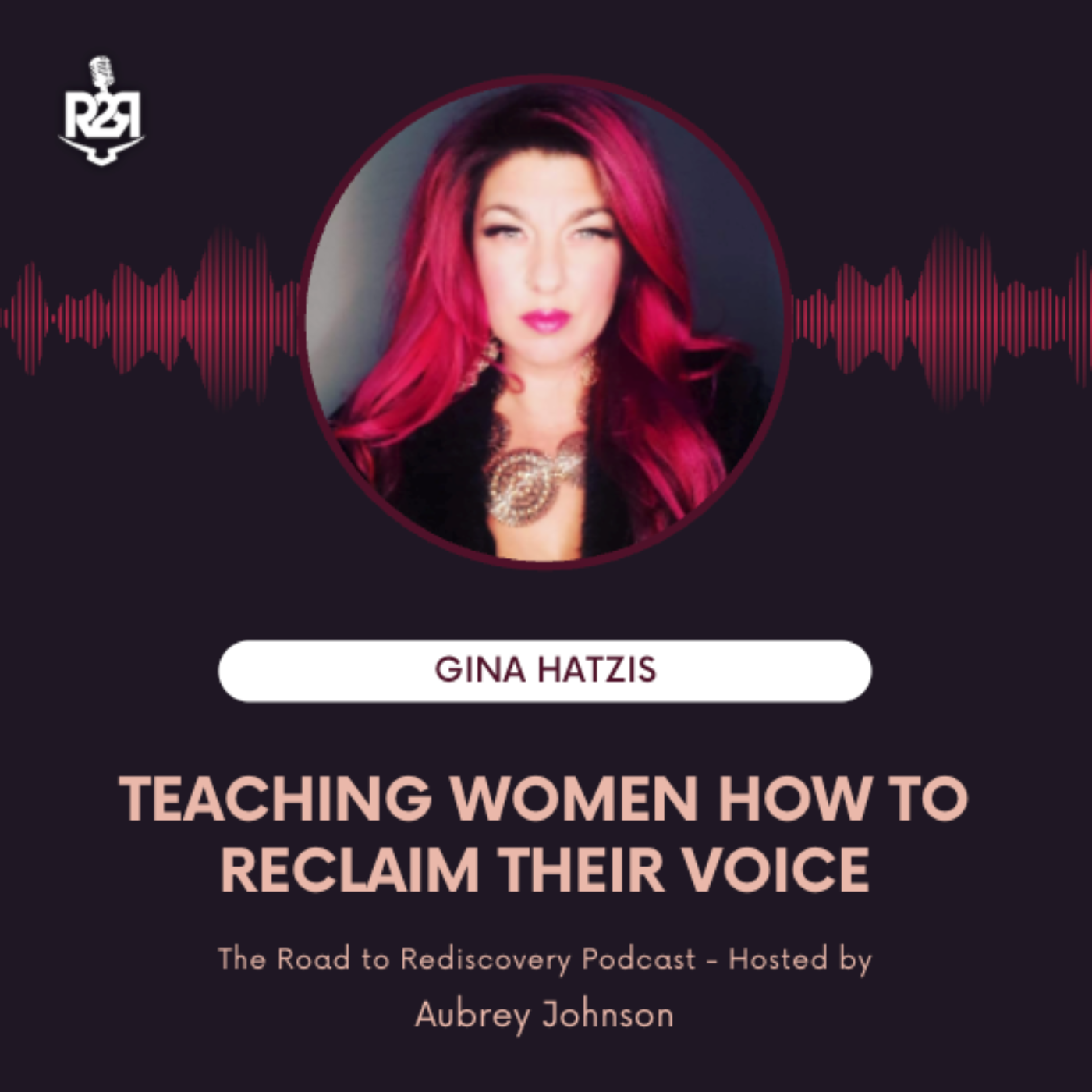
Gina Hatzis is a Global Award Winning Speaker, Author,and Confidence Educator. She is also a Champion of Women’s Empowerment.
Tune in, as Gina shares her early struggles of shrinking herself, “dimming” her light for the purpose of feeling comfortable, loved, and accepted.
Gina also talks about her defining moment to make the conscious choice to be resilient, and the daily grind to commit to unapologetically reclaiming her identity and authenticity.
To connect with Gina, and learn more about her great work, visit https://ginahatzis.com/
You can also connect with her on Facebook: https://www.facebook.com/Gina.TooMuchWoman
And Instagram: https://www.instagram.com/ginahatzis/
If you like what you hear, buy me a coffee to support the show and get a shout-out in a future episode!
Show Notes
Gina Hatzis is a Global Award Winning Speaker, Author,and Confidence Educator. She is also a Champion of Women’s Empowerment.
Tune in, as Gina shares her early struggles of shrinking herself, “dimming” her light for the purpose of feeling comfortable, loved, and accepted.
Gina also talks about her defining moment to make the conscious choice to be resilient, and the daily grind to commit to unapologetically reclaiming her identity and authenticity.
To connect with Gina, and learn more about her great work, visit https://ginahatzis.com/
You can also connect with her on Facebook: https://www.facebook.com/Gina.TooMuchWoman
And Instagram: https://www.instagram.com/ginahatzis/
If you like what you hear, buy me a coffee to support the show and get a shout-out in a future episode!
Show Transcript
Hello fellow travelers on the road that is life's journey. This is Kim Best of Best Conflict Solutions. You chose the right path by listening to Aubrey and the Road to Rediscovery. Enjoy.
Our lives are laid out on a road of bumps, turns, struggles and more. How do we respond? How do we endure adversity for learning and growth? I'm Aubrey Johnson and we'll explore these questions and more on The Roads Rediscovery.
Hello everyone and welcome to another exciting episode of The Roads Rediscovery. I'm your host, Aubrey Johnson. The Roads Rediscovery is about reflecting on life lessons to learn and grow from them and of course, pay it forward and uplift others who are struggling through dark times. I'm excited to share that the Stan store, our road to rediscovery Stan store is now officially open.
That's right. Inspired by this podcast and the many insights from our many amazing guests. We have all sorts of resources targeting your personal growth from free e -guides to eBooks to the full blown rediscovery roadmap, digital course, get on the road to overcoming adversities and realizing your true potential by visiting us. at stan .store slash road to rediscovery.
That's stan .store slash road, the number two rediscovery. And as always, we are so, so very grateful for your listenership. All right. My special guest is a global award winning speaker, author, and confidence educator.
Her winning speech, Too Much Woman, went viral, sparking an amazing book, and the massive hashtag Too Much Woman movement and community. a definitive, inspiring figure, lifting up her sisters. She not only lives her truth, she owns it. Ladies and gentlemen, let's welcome Gina Hatsy to the show.
Gina, welcome to the show. We are so happy to have you here. Hi, Aubrey. Hi, beautiful people.
What an honor to be here. Thank you for having me. Oh, thank you. We are equally, equally excited.
Well, Gina, I told the guests earlier, sorry, I told the listeners, uh, in an earlier, like preview feed to get ready for an eye opening, wake up and smell the coffee conversation. Okay. And that's exactly what I believe by heart of hearts that we are going to dive into. And I have to say, uh, selfishly.
Okay. I became quite moved and intrigued by, uh, your mission, by your message, by what you have. communicated in not only the winning speech, but also just reels and posts. And later in our conversation, there's one that I would like to point out that it's something that I never thought of, but it makes so much sense that you have brought out and brought visibility to.
for a lot of people to realize, especially for people who need to keep others within a boundary, right? Yeah. So Gina, before we get into that though, can you give us an early glimpse into your journey and some experiences that inspired you to do the amazing work you are doing today? Oh, what a beautiful question.
Where to start? Well, I was born a too much little girl. And in every way, I was told both by word and by deed that I was too much. So I was too sensitive.
I was too emotional. There's a legend in my family that I cried at every one of my birthday parties. There's pictures to match, right? With me, tears stained behind my birthday cake with a different the different numerical candles.
I was too dramatic, of course. I was, as I grew older, too ambitious, too mouthy, too loud, too needy, too bold. And as I went into my womanhood, I was too bodacious and too sensual and all the things. So my early experiences, you know, as a child getting Getting the backlash or love withdrawn or getting reprimanded for being too much.
I tell the story in my viral video of Also being beat up in high school and even as an adult having an experience in an all white male speaker industry Having some difficult experiences as a young woman. I talk about how all of those experiences which gave me the consequence of being too much, which showed up for me as fear, reprimand, heartache, love withdrawn, jealousy, even abuse taught me that it wasn't safe to be me. And so I spent many, many years, as we all do to some capacity, shrinking myself, morphing myself, trying to adapt, trying to feel safe, trying to fit the mold of the good right girl. so that I would be loved and accepted.
And this goes both personally and professionally. And we all know how that story goes. And we can do it for a while until we can no longer be contained in that box. And then we start to seep out, like our true selves start to seep out.
And that was my story. I see. I see. Wow.
It's absolutely fascinating. And I could see how that can be the springboard to what you're speaking to today, these days, right? But my goodness, I mean, it's almost like your mind is indoctrinated at such an early age for the too much, too much this, too much that. And when you're very young and you're told this by loved ones or by classmates or teachers, I guess, I mean, You know, how do you process that?
What's the connotation that is naturally received by a youth when they're told this at such a consistent rate? I mean, what was your original connotation? I was a very observant and sensitive child. And I think most of us are.
I mean, really at our essence. I mean, I was so hyper aware. I'd walk into a room and I could Scan the room and notice what's the energy and what do I need to do in order to feel safe or get love? I mean, I think as children we know that our formative years are zero to seven, right?
And so we're we're seeking our primary goal is to get the love and attention and approval of our parents and so that's that's all I cared about and so um when and my mother who was well -meaning my father was out of the picture for a long time, but my mother who was well -meaning really wanted me to be strong and tough and brave and courageous and all of these wonderful attributes. And at the same time, the messaging was that I was going about it wrong and who I was was wrong. And here's the interesting thing. I got to mention this because I've had over the years the great fortune of so many people sharing their stories with me.
And I thought no one would get The too much woman. I thought no one would really understand because Working with women for over 30 years the story that I've heard and men by the way The story that I heard over and over was I feel like I'm not enough. I Feel like I'm not enough. And so the interesting thing though is if we think of a coin Too much is the opposite side of the same coin as not enough because if we're too sensitive, we're not strong enough.
You know, if we're too emotional, we're not stoic enough. If we're too bold, then we're not demure enough. And so it's just linguistic. It's just different language.
And so at the end of the day, the message that I think most people, I haven't found a person who doesn't resonate with the message of something about you is wrong and it needs to change. And so, you know, as children, we are clean, precious blank slate. And we're just trying to get the love that we want. And by the way, That never changes.
So we become aware, you know, as adults we repeat these patterns I know I have in my love life and my work in my relationships until I can create a pattern interrupt Yeah, hold on a second me morphing and contorting myself in order to get the love the job the approval the promotion That actually is not working long term for me, because then I'm dissociated from myself. And we all know that there are consequences of not being who we really are. So I'm sure we'll think about those things. Yeah.
Yeah. Yeah. No, for sure. And the one thing you mentioned a minute ago about the two sides of the coin, that is so true.
I mean, there are so many conversations, deep conversations. of people having feelings of inadequacy, right? And not being enough. But then when you're told you're too much, it is the same coin just on the opposite side.
And there's an imbalance there somewhere, it feels like at least. A couple of things that kind of comes to mind when you mentioned this, Gina. First off is, at a young age, when you come in and being very observant, as observant as you have been and as you are, reading the room, scanning the room, what type of audiences in here, the people, right? I mean, not to imply that you're performing, but what does the group look like in a classroom, for instance, or in the mall, or?
at a high school football game or something like that. And what can you do to feel accepted, to feel like a part of the group and everything? During this time growing up, being told this and observing and trying to make your adjustments, I can't help but think that you have over the years built a resilience, a resilience that eventually led you to To to owning who you are and and and and and how you are Would that be accurate or did it take was more of a process? You know, i'd love to paint a beautiful picture of you know, these hard times that have built this strong core That would really romanticize the story.
The truth is that that I mean, you know, we are formed during The hardest times and we don't know how powerful we are how courageous we are until you know, the pedal hits the metal That's right. However, that was never You know in retrospect the resilience really came from making choices conscious choices The resilience didn't come from just surviving it came from me deciding and deciding over and over again That I was going to choose differently. You know, the resilience is an intentional action when I said, you know what, the way, and I remember, I remember a pivotal moment when I was like, no matter what I do, I'm never gonna be loved fully for who I really am. I could pretend until the cows come home, you can give me an Academy Award for all of the ways that I performed and contorted myself in order to be loved, but who they were loving was not actually me.
And when that moment clicked, And I decided to take the harder road. And the harder road is to be in integrity with me. Bearing off the road a little bit, trying to people please, and then catching myself coming back and being integrity with me. And there are consequences to that, right?
Bearing off the road again in another situation and then catching myself and coming back in integrity with me. That's where resilience is born. Resilience can be just born from hard times. Resilience is born when we decide that we can make a different choice.
And we have to make that choice, not once, not twice, but over and over again, every single day. And we start to do something incredible in those moments. We actually start to build our self -trust muscle. It's like going to the gym every day and lifting weights.
You don't see the progress immediately.
But over time, if you lift five pounds, seven pounds, 10 pounds, and you're consistent, you start to build that self -trust muscle that says, wait a second I can prove to myself that I can show up for myself and that's when the game really changes yeah yeah no it certainly certainly changes then right building up that uh muscle the muscle memory building up the um just a habit right of making the good choices making the conscious decision to and the courage to Go off that road to veer off that road and then come back to integrity and so forth It's done repeatedly just as you said and as you were saying this Gina it reminded me of a solo episode I've done years ago talking about my insecurities in high school, right and always wanting to feel accepted always wanted to be wanted to feel like part of the group, you know, and being a military Brad, I moved around a lot.
So I was a new kid in class a lot. And so wanting to feel accepted was it. And as I pursued it, you know, I felt more I don't know, I just I just felt more not ostracized, but just as an outcast. Right.
And so until that day, I decided, you know what, I'm just going to march to the beat of my own drum. Do what I enjoy doing, you know, talk to who I enjoy talking to. And then somehow in the way the universe works, you know, then you attract people and people gravitate to you. I mean, it's so odd.
It's almost counterintuitive. So I want to thank you for just sharing, you know, the ways that you've tried to make yourself flexible, to be accepted and loved and then making and having courage to make that decision to go your own road, to veer off the road, and to focus in and hone in on your integrity. Yeah, that's absolutely fascinating. And to me, it shows the foundation of where your resilience was built from.
So thank you. Thank you for that, Gina, in a big way. There is one part of your speech that I found, well, I found the whole thing intriguing. OK, the whole experience was very intriguing.
and your transparency in what you shared. Very, very fascinating and relative to what a lot of people go through, you know, in whatever capacity. But there was a part of your speech that I found profound, okay, and I want to ask if you can maybe break this down for the listener's benefit, but in that part of your speech, Gina, you mentioned that, and I'm kind of quoting, paraphrasing, People carelessly say love your body But they don't what they don't say is baby. It's a dangerous game Can you kind of break that down for us and unpack?
the direction of that I found that very profound and And and and and something I guess people need to be aware of you know when you're being told this message For sure. So that speech in particular, by the way, it was just meant to be a little speaking competition in the city that I live. I thought it was going to be like 30 people in a bar. I had no idea that when the competition, it would blow up to 50 million.
Had I known, I probably wouldn't have written that speech. But the topic of the evening was about, it was body themed. And so what I did was I took the part of my Too Much Woman story. And talked about being in my too much body And so um that just to give it a little bit of context so yeah part of my speech I talk about how you know growing up as a too much little girl and then as a too much teenager and as a too much woman Being in this body that I kept getting the message that it was wrong that it was it would bring danger It would bring um abuse it would invite all kinds of very Difficult situations and that my body in some way was wrong.
And so people are always saying, you know, love yourself self love Like embrace your body. I mean we go in the you know, the internet is romanticized I get this beautiful thing But what people don't tell you is that when you do if you do if you can come to a point And I hope that you do come to have reverence For your body come to accept, you know, I am in a bigger than traditional body and I have morphed and tucked and You know minimize and i've done all the things but when I finally have come into this too much body And i've started to really have reverence for how incredible it is And how it served me that's not the other side of the rainbow You don't go floating off like unicorns farting rainbows because now I love my body.
I mean it is a dangerous game And so what i've learned on social media The by -product of that is that being in the glory of this body and celebrating her And not apologizing for her and embracing her how she looks as she ages in my fullness Is a dangerous game, you know people will criticize you people will try to shame you People will be afraid of you. They'll ignore you. They will run from you. They will insult you They'll be jealous of you and they will ultimately wish that they can do the same So it's not just making that decision that makes everything great and we ride off into the sunset It is a dangerous game.
And so um, it very much requires that self -trust It very much because there are so many days i'll be I do not want to go on the internet. And there have been months, spans of months where I haven't, just from self -preservation because the backlash has been so severe. And so I guess in the short answer to your question is it's not just in the decision to choose myself or this body or who I am or be authentic. That's the game changer.
The game changer, as I said, is the continual ongoing choosing, like every day I gotta get up and reclaim her. Every day I have to get up and go outside. And it does get easier. It does get easier, but it's an ongoing, forever and ever until eternity, intentional choice.
Yeah, no, I can understand that for sure. And once you make that decision or make that choice to... to say, okay, I'm gonna embrace this and who I am and how I look and so forth. It's not the end, it's the beginning, right?
And so one thing I really appreciate in how you clarified that for us, Gina, and I wanna thank you for this, is with all this romanticizing that the public has done with body positivity and so forth. Um, you are taking a very transparent and real approach to saying, yeah, all that is fine and nice and everything. Okay. But it's not cake and sunshine.
And by the way, you, you have to equip yourself or how you respond and how, and how, you know, your mind is affected. Um, if you let it by the public, by society, um, when you. make this decision so okay make the decision but be prepared be prepared and also i'll take it a step further if i may yeah this is what's happened since the speech i mean the speech went viral a few years ago and then i went on a tour and i was talking to people all over the world and yes i have experience but here's the great learning that only happened in the past few years okay i gotta tell you like i'm kind of bored of of proclaiming that. Like I'm tired of posting about celebrating my body.
I mean, there's so much more that's interesting about me than my body. Like I just feel like even now the Ozempic craze, and I don't want to dismiss anybody who's struggling with their body image or anything like that. But what I want to say is like, aren't we over the... It's 2025, y 'all.
Are we not beyond this conversation where we're still trying to justify and make a case for loving our bodies? I just feel like we need to mature beyond the conversation. I don't even consider myself a body positive advocate anymore. I just feel like we talked about it.
It's not that that ever goes away because it's such an important like for men too, you know, it's such an important Every day we look in the mirror and we have to confront ourselves what i'm saying is Can we not focus so much as a society as an individual? On that one piece because I will tell you like I am so much more than like I I am so much more fascinating and i'm sure you are too and i'm sure your listeners are too and I I feel like once I took a stance with that speech Like I was pigeonholed for that and I I kind of yeah that Yeah, yeah, and and and that's not fair right? I mean You know and it's it's good to get the message out and and you know message out They hear you loud and clear, but you're so much more than that. Okay, that's not the conversation.
Yeah Yeah, and that's not who that's not what defines you right and and and and and thank you for that because Uh, we do want to know what's more to Gina, right? And, and so, uh, there's some things I want to, I want to ask you or talk with you about. Okay. That goes beyond body positivity.
Okay. But it's something that I am truly, um, you know, as a podcaster who has supported various women's empowerment groups, even here in Dallas, um, there are things I wanted to chat with you about, um, regarding, I'm gonna say mainstream and just current events and your thoughts on things here, if you don't mind. Yeah, let's do it. All right, fantastic.
So first off, and I think I know your answer to this, you kind of alluded to this, but for generations, right? I mean, unfortunately, society has this great mountain of pressure and expectations that's placed among men, women, blacks, browns, whites, people of all different colors, just the expectations of based on who you are, what color you are, how old you are, you should be this gender, you should be that gender, you should be hanging out in the clubs, or you should be on a lake fishing, you know, and it's like, to your point, societal pigeonholes based on our demographic. And over generations, that has just been so driven and so driven and so driven. However, as society evolves over years and generations, I wonder what are your thoughts on those expectations?
Are they becoming worse or have they laxed back and become, you know, not as not as pressuring for people to be who they truly want to be? What are your thoughts on? Yeah, that's a great question. Have they gotten worse?
I think what's what's happened is they heightened only because it's everywhere we look like before or many years ago when I was a child. when I was a young child, and there was no social media and we weren't tethered to our phones. Certainly we were exposed, there were magazines, there was television, but we had breaks in the day. We had breaks where we hang out at the park or I'm in Canada so we'd go to the ice rink.
We'd have breaks in our day and I feel now I have two children, 19 and 21, but during their lifetime these devices were introduced that are attached to us. It's almost like another part it's like we don't go without it and it's constantly dictating promoting infiltrating and so I think that that intensity I mean now if I say you know I'm going to go digital free for the day or the weekend or whatever like oh my god how am I going to get in touch with you so I do think that you know And you know, we're tethered to it. So I'm concerned about that. Like there is no break.
Like I remember a time when I would be sitting in the car, my family's actually from the States and we drive from Toronto across the border into New York where my family was. And it was hours and hours and hours of utter boredom. Like sitting in the car, like, cause I couldn't read, I'd get car sick and just, there was nothing to do. You would just like look up at the daydream.
You know now we are just tethered and so I think it's just so it's like an octopus on her face now So it really is since there's more intensity for sure for sure. Okay, that makes sense when we're talking society and the societal pressure of things like technology our devices social media Yeah, yeah, that's that's a truly heightened expectation these days Awesome. Thank you for sharing that insight and I couldn't agree more by the way now Let's talk sports. I'm a sports fan.
I love all kinds of sports and One thing I've come to appreciate and to me it's a long time coming. Okay I'm a parent. Okay, I don't have a daughter But I have a son, he's my only son, he's 27 years old. And being a sports fan, I've coached him ever since he was knee high, okay.
And he went on to play division one college ball and everything. So, very proud of that and everything. If I had a daughter, I would have probably done the same thing, coached her in all kinds of sports and everything. And what I wanna talk to you about and get your thoughts on are, In sports, young women are now participating in things like flag football, right?
In fact, I think I even read about a women's tackle league that launched last year. But women are also wrestling in the WWE. And the WNBA has taken off now with Caitlin Clark and her emergence from Iowa. after she graduated now playing in the WNBA.
So a lot of this is really starting to have a strong presence as it should have, you know, alongside with men's sports. I know there's still some strides to get there, but it's really starting to have a strong presence and I'm loving that. While I'm a believer that sports can build anyone's confidence, do you believe there's a shift? in the narrative with the type of sports that women are now participating in today, not to disrespect these others, but going beyond being a gymnast or ice skating or tennis or gymnastics and things like that.
I mean, they're going for either like football or wrestling or basketball. What are your thoughts on that? No, I think that was always the case. I have a son and a daughter and my daughter was the athlete.
their dad's chagrin but you know i think that was only the case i was very much into sports as a kid i would slide into every base i'd come home bloodied i played soccer i was like into wrestling type one don't like I loved all the things but it came to a point and there's a lot of research around this It came to a point in school and I went to an all girls catholics high school So, you know, I didn't even have the boys around but it did come to a point where that was not considered cool And that was frowned upon and I think you know as a young impressionable person We just get turned off just like girls can't be smart Yeah, girls can't certainly be tough either. And so I think the shift that we're seeing is, you know, these are one of the benefits perhaps of social media or the internet, where we're seeing women do other things and we're saying, wow, if she can do it, I can do it.
And that's actually one of my fundamental principles of the work that I do. It's called being a model of possibility. Because here's the thing, if we do not see other people doing the thing, then it doesn't even seed into our mind that it's a possibility. So I think the shift that we're seeing is just the exposure To other women doing things thinking oh wrestling never thought of that touch football.
That would be cool Wait, maybe I want to do that. And so now we're just being a little bit more audacious And we're having more exposure, but I I think that women why wouldn't we want to do all the things? Why wouldn't we want to again same goes for academics? Why don't we want to study?
It was like you want to you want to get a master's and a doctor Why you know like yeah crazy, but like what? Why I love sports. I love rough. I grew up with an older brother and we we reenacted every WWF wrestling match that I was right into it with him and it wasn't until it came to a point that that wasn't cool or I was a calm boy or so I just think We're dynamic creatures.
Of course we wanted, and vice versa. There's a lot of guys who might want to alternatively try otherwise more feminine activities or sports because they just don't have the opportunity because it's frowned upon. So I think more than anything, we're just becoming a little bit, well, some of us are becoming a little bit more open -minded and some of us are still really scared and clamping down. So there's a lot going on.
Yeah, there is a lot going on. And, you know, it all comes back to what we talked about a minute ago, right? Societal pressures. Some of those societal pressures can be so strong where the people, whether it's a man trying to or wanting to pursue something maybe not as manly of, you know, a hobby or a sport or something, or vice versa for a woman, you know, society can get so strong to some people, you know, saying, well, no, you shouldn't be that way.
Our expectation is this, that it would keep them from realizing their true potential and living their dream of what and who they wanna be. But those who are more open -minded, those who are more, they want to embrace that friction, I think is very admirable. And I think it is what opens the gate for other people because there's strength in numbers, right? Is there strength in numbers?
I can't help but, like you mentioned earlier, being too loud, too boisterous, too vocal. Well, that's not bad, really. Sometimes someone who is very vocal, they're probably in a group of people telling someone something about how they feel. That everyone else feels the same way, but they were for sure I've been told by many men that no man likes like a loud confident woman because there's certain some certain men who don't but the ones that do They they love that.
So I'm not here to You know, I am not pizza. I am not here for everyone to love me. You know, I am Dita Von T says, you know, you can be the juiciest, ripest peach and there's going to be some fool out there that doesn't like peaches. So my job is to be the most Gina that I can be.
And some people are gonna love me. If everybody loves me, I'm doing something wrong. And you know, as a public figure and a speaker, we've had to learn the hard way that my goal is not to get everyone to like me. And if they do, if everyone's agreeing with me, I'm probably doing something wrong.
It's to be the most me. Yes, yes. And that is as genuine and as authentic as it gets. And you know, I mean, you can't please everyone.
And if you are being authentic in who you are, then the rest is just noise. It's just noise. In your heart of hearts, you know who you are, you know you're being who you are, and you're unapologetic for it. So that is a huge thing.
And to me, it just speaks to the security that you have in yourself. And men who claim that they don't like women who's confident like that, that just speaks to their insecurity. So for what it's worth. Yeah, for what it's worth.
So man, that's awesome. And speaking about being unapologetically you, I wanted to ask you about, this is something I've seen in how you speak. in your reels, how you speak in your posts and so forth. And it's just, you know, it's an observation, but I wanted to get your insights on this.
I noticed you have what I call, I'm gonna quote, a beautiful balance. And what I mean by that in what I've seen and what I've heard is with this balance, right? It encourages people with the virtues of ownership, rising up, being confident, right? and being unapologetically you.
But you also champion kindness, thoughtfulness, character, integrity, empathy. You also champion those and you set the example for those. And I see it in your posts. And so I'm just wondering, you know, as a public figure, I know you're genuinely like this, but as a public figure, you feel it's like part of a public figure's responsibility to have a balance like that.
And is that a responsibility of people you feel in your community to have that same balance or at least try to find it? Yeah, it's a really good question because I have to be honest. I have to put a lot of effort into that. And the reason is because growing up, the most important thing for me to be was a good girl.
I was raised by martyrs. And so my mother was a martyr. My grandfather was a martyr. The people I admired and loved most in the world were good people.
And so I modeled myself after that. And being a good person meant acquiescing to other people's needs, putting other people before me and all this stuff. We hear all the time and and I only when I had my children, I just wanted them to be good people That was like the most important thing. I just want good people Um, and that's changed That's not the highest marker of success anymore for me because what i've learned through my own experience And now with coaching so many people and working with so many people is that goodness is not the highest most virtuous?
measure of success The the highest most virtuous measure of success is being in integrity And so integrity means being true to myself first. Now, that doesn't mean that I'm a jerk. It doesn't mean me only and nobody else. But what I know from my life experience is that if I fill my cup, then I can serve from the overflow.
And that's what I give other people. But in the reverse, I live most of my life in the reverse, where I would give all of my best Away, you know the mother as a wife is it like all the things that I was Yeah, and then I had nothing for myself and what I learned is that when I served from that place I was resentful. I was angry. I was bitter I was depleted.
I was impatient. I just didn't I couldn't give the way I wanted to and so There's a there's an order of operations. And so for me, it's it's less balance and more harmony Harmony is like is like I'm going to I I start with soft mornings So what that means is I I start my day with me like I pour into me I do not work before a certain time I like I start my day with me and then the rest of the day I'm serving and so for most of my life It was like let me take care of everybody else and then Sunday morning if I get an hour to drink my coffee alone I'll take it so your question Yes, it's a responsibility. However, there's a there's a there's a harmony to it meaning that what it happened There's an order of operations.
I need to take care of self I won't abandon myself in the name of being a good person. I won't abandon myself in any way I know what my core values are and from that place. I'm the best lover teacher mentor parent friend and so It's important to understand the order of operations. For me, anyway.
Well, yeah, I think universally, right? It should be that way. And I believe it's just now starting to make that turn, turn the corner, with that being a common school of thought, so to speak. Just like they say on the plane, right?
when cabin pressure folds and the masks go down, cover your mask first, then assist someone with theirs, right? You have to take care of your own needs and maintain your mental, spiritual mindset, get your mind right, and your whole way of working, thinking, being, before you can show up to be of help and service to someone else, right? Yeah, it's not either or and I think it's very easy to slide back into old habits, you know I work with people all the time they get it Intellectually like there's a neck -up understanding.
Yeah comes to shove you can overwhelm us and the sense of duty can overwhelm us so it's it's really important that we Again come back into integrity come back into integrity because that's really where we serve the world best from that place Oh entirely entirely and and you know, like you said when people who can get it from the neck up from a cerebral standpoint, that's one thing, right? But then what is your knee jerk reaction? Yeah, when times gets tough, and then a certain event happens to where you have to make that decision. Okay, is it my knee or someone else's?
And then you automatically gravitate to someone else's knees, like, hey, wait, time out, you know, I thought we were just talking about this thing here, you know? So, so yeah. There has to be a behavior and a willingness to make that paradigm shift You know to where you do take care of yourself first and show others you have to show up for yourself So yeah, and by the way, Gina, I want to thank you for Clarifying, you know, there is a true difference making that distinct that distinction between balance and harmonization So there is a true difference between the two and I am tracking you 100%. Wonderful.
Well, to help wrap us up here, Gina, I would love to ask you a question. And basically, it's a complete the sentence type of question. So if you can complete the sentence for me with one word, two words, five words, as many words as you wish. But if you can complete the following sentence.
My power starts with. A regulated nervous system. And a true sense of my core values and what's important to me. All coming back to integrity in who you are.
Wonderful, wonderful. So Gina. How can the listeners follow you, connect with you, learn more about your great work? Oh, thank you.
Thank you. I like to say I'm everywhere, so you can search to my woman or my name, Gina Hapsis. I'm GinaHapsis .com, and I'm on most of the most prominent platforms, and I'd love to see you there. I'm everywhere.
I'm in all places, omnipotent. But yeah, GinaHatsus .com is my website, but probably the best place is Instagram or on Facebook. And I love engaging with people and hearing what their experiences are. So love to see you online.
Man, that's fantastic. OK, so you know what? We're going to just jam the episode show notes with all sorts of web addresses. Facebook group names, page names, Instagram, social media handles, and just all sorts of good information on who and where we can find more amazing work from Gina Hatzis.
It'll be on the episode show notes. They can click those links while listening to this wonderful, wonderful conversation. Gina Hatzis. I want to thank you so much.
It's been an absolute honor coming on for you to come on to the show. We are truly grateful for it. And I hope we can stay in touch and maybe, you know, bring you back on when you release the next book. Yeah, yeah.
Thank you so much. It was such a pleasure. Thank you. This is fun.
Oh, absolutely. We reciprocate. I thank you as well. And I want to thank all of you for tuning in and listening.
And hey, look, you know, you may Think that in your daily struggles and adversities that you're alone. But truthfully, we are never alone and hope is always around the corner. I humbly ask that you please share this show with someone you know, someone you love who needs motivation, inspiration, and support. You know, when it all comes down to it, we're all just roadies on this journey of life.
And it sure feels good having you on the road with me. Until next time. Thanks again for listening. Chat again soon.
We really hope you enjoyed this episode of the Rhodes Rediscovery. We'd love to hear from you. Shoot us an email at RhodesRediscoveryPodcast at gmail .com and leave us any questions or comments you may have.
Listen On
Also In Season 11
-
Servant Leadership and Growth: Lessons from John Marvin
Hey there! Leave me a voicemail with any feedback or questions!As the CEO and P -
Behind the Scenes of Success
Hey there! Leave me a voicemail with any feedback or questions!In an outcome, r -
Transforming Bad Habits to Optimized Living Wealth, with Jack Landry
Hey there! Leave me a voicemail with any feedback or questions!After reaching a
Transcript
Hello fellow travelers on the road that is life's journey. This is Kim Best of Best Conflict Solutions. You chose the right path by listening to Aubrey and the Road to Rediscovery. Enjoy.
Our lives are laid out on a road of bumps, turns, struggles and more. How do we respond? How do we endure adversity for learning and growth? I'm Aubrey Johnson and we'll explore these questions and more on The Roads Rediscovery.
Hello everyone and welcome to another exciting episode of The Roads Rediscovery. I'm your host, Aubrey Johnson. The Roads Rediscovery is about reflecting on life lessons to learn and grow from them and of course, pay it forward and uplift others who are struggling through dark times. I'm excited to share that the Stan store, our road to rediscovery Stan store is now officially open.
That's right. Inspired by this podcast and the many insights from our many amazing guests. We have all sorts of resources targeting your personal growth from free e -guides to eBooks to the full blown rediscovery roadmap, digital course, get on the road to overcoming adversities and realizing your true potential by visiting us. at stan .store slash road to rediscovery.
That's stan .store slash road, the number two rediscovery. And as always, we are so, so very grateful for your listenership. All right. My special guest is a global award winning speaker, author, and confidence educator.
Her winning speech, Too Much Woman, went viral, sparking an amazing book, and the massive hashtag Too Much Woman movement and community. a definitive, inspiring figure, lifting up her sisters. She not only lives her truth, she owns it. Ladies and gentlemen, let's welcome Gina Hatsy to the show.
Gina, welcome to the show. We are so happy to have you here. Hi, Aubrey. Hi, beautiful people.
What an honor to be here. Thank you for having me. Oh, thank you. We are equally, equally excited.
Well, Gina, I told the guests earlier, sorry, I told the listeners, uh, in an earlier, like preview feed to get ready for an eye opening, wake up and smell the coffee conversation. Okay. And that's exactly what I believe by heart of hearts that we are going to dive into. And I have to say, uh, selfishly.
Okay. I became quite moved and intrigued by, uh, your mission, by your message, by what you have. communicated in not only the winning speech, but also just reels and posts. And later in our conversation, there's one that I would like to point out that it's something that I never thought of, but it makes so much sense that you have brought out and brought visibility to.
for a lot of people to realize, especially for people who need to keep others within a boundary, right? Yeah. So Gina, before we get into that though, can you give us an early glimpse into your journey and some experiences that inspired you to do the amazing work you are doing today? Oh, what a beautiful question.
Where to start? Well, I was born a too much little girl. And in every way, I was told both by word and by deed that I was too much. So I was too sensitive.
I was too emotional. There's a legend in my family that I cried at every one of my birthday parties. There's pictures to match, right? With me, tears stained behind my birthday cake with a different the different numerical candles.
I was too dramatic, of course. I was, as I grew older, too ambitious, too mouthy, too loud, too needy, too bold. And as I went into my womanhood, I was too bodacious and too sensual and all the things. So my early experiences, you know, as a child getting Getting the backlash or love withdrawn or getting reprimanded for being too much.
I tell the story in my viral video of Also being beat up in high school and even as an adult having an experience in an all white male speaker industry Having some difficult experiences as a young woman. I talk about how all of those experiences which gave me the consequence of being too much, which showed up for me as fear, reprimand, heartache, love withdrawn, jealousy, even abuse taught me that it wasn't safe to be me. And so I spent many, many years, as we all do to some capacity, shrinking myself, morphing myself, trying to adapt, trying to feel safe, trying to fit the mold of the good right girl. so that I would be loved and accepted.
And this goes both personally and professionally. And we all know how that story goes. And we can do it for a while until we can no longer be contained in that box. And then we start to seep out, like our true selves start to seep out.
And that was my story. I see. I see. Wow.
It's absolutely fascinating. And I could see how that can be the springboard to what you're speaking to today, these days, right? But my goodness, I mean, it's almost like your mind is indoctrinated at such an early age for the too much, too much this, too much that. And when you're very young and you're told this by loved ones or by classmates or teachers, I guess, I mean, You know, how do you process that?
What's the connotation that is naturally received by a youth when they're told this at such a consistent rate? I mean, what was your original connotation? I was a very observant and sensitive child. And I think most of us are.
I mean, really at our essence. I mean, I was so hyper aware. I'd walk into a room and I could Scan the room and notice what's the energy and what do I need to do in order to feel safe or get love? I mean, I think as children we know that our formative years are zero to seven, right?
And so we're we're seeking our primary goal is to get the love and attention and approval of our parents and so that's that's all I cared about and so um when and my mother who was well -meaning my father was out of the picture for a long time, but my mother who was well -meaning really wanted me to be strong and tough and brave and courageous and all of these wonderful attributes. And at the same time, the messaging was that I was going about it wrong and who I was was wrong. And here's the interesting thing. I got to mention this because I've had over the years the great fortune of so many people sharing their stories with me.
And I thought no one would get The too much woman. I thought no one would really understand because Working with women for over 30 years the story that I've heard and men by the way The story that I heard over and over was I feel like I'm not enough. I Feel like I'm not enough. And so the interesting thing though is if we think of a coin Too much is the opposite side of the same coin as not enough because if we're too sensitive, we're not strong enough.
You know, if we're too emotional, we're not stoic enough. If we're too bold, then we're not demure enough. And so it's just linguistic. It's just different language.
And so at the end of the day, the message that I think most people, I haven't found a person who doesn't resonate with the message of something about you is wrong and it needs to change. And so, you know, as children, we are clean, precious blank slate. And we're just trying to get the love that we want. And by the way, That never changes.
So we become aware, you know, as adults we repeat these patterns I know I have in my love life and my work in my relationships until I can create a pattern interrupt Yeah, hold on a second me morphing and contorting myself in order to get the love the job the approval the promotion That actually is not working long term for me, because then I'm dissociated from myself. And we all know that there are consequences of not being who we really are. So I'm sure we'll think about those things. Yeah.
Yeah. Yeah. No, for sure. And the one thing you mentioned a minute ago about the two sides of the coin, that is so true.
I mean, there are so many conversations, deep conversations. of people having feelings of inadequacy, right? And not being enough. But then when you're told you're too much, it is the same coin just on the opposite side.
And there's an imbalance there somewhere, it feels like at least. A couple of things that kind of comes to mind when you mentioned this, Gina. First off is, at a young age, when you come in and being very observant, as observant as you have been and as you are, reading the room, scanning the room, what type of audiences in here, the people, right? I mean, not to imply that you're performing, but what does the group look like in a classroom, for instance, or in the mall, or?
at a high school football game or something like that. And what can you do to feel accepted, to feel like a part of the group and everything? During this time growing up, being told this and observing and trying to make your adjustments, I can't help but think that you have over the years built a resilience, a resilience that eventually led you to To to owning who you are and and and and and how you are Would that be accurate or did it take was more of a process? You know, i'd love to paint a beautiful picture of you know, these hard times that have built this strong core That would really romanticize the story.
The truth is that that I mean, you know, we are formed during The hardest times and we don't know how powerful we are how courageous we are until you know, the pedal hits the metal That's right. However, that was never You know in retrospect the resilience really came from making choices conscious choices The resilience didn't come from just surviving it came from me deciding and deciding over and over again That I was going to choose differently. You know, the resilience is an intentional action when I said, you know what, the way, and I remember, I remember a pivotal moment when I was like, no matter what I do, I'm never gonna be loved fully for who I really am. I could pretend until the cows come home, you can give me an Academy Award for all of the ways that I performed and contorted myself in order to be loved, but who they were loving was not actually me.
And when that moment clicked, And I decided to take the harder road. And the harder road is to be in integrity with me. Bearing off the road a little bit, trying to people please, and then catching myself coming back and being integrity with me. And there are consequences to that, right?
Bearing off the road again in another situation and then catching myself and coming back in integrity with me. That's where resilience is born. Resilience can be just born from hard times. Resilience is born when we decide that we can make a different choice.
And we have to make that choice, not once, not twice, but over and over again, every single day. And we start to do something incredible in those moments. We actually start to build our self -trust muscle. It's like going to the gym every day and lifting weights.
You don't see the progress immediately. But over time, if you lift five pounds, seven pounds, 10 pounds, and you're consistent, you start to build that self -trust muscle that says, wait a second I can prove to myself that I can show up for myself and that's when the game really changes yeah yeah no it certainly certainly changes then right building up that uh muscle the muscle memory building up the um just a habit right of making the good choices making the conscious decision to and the courage to Go off that road to veer off that road and then come back to integrity and so forth It's done repeatedly just as you said and as you were saying this Gina it reminded me of a solo episode I've done years ago talking about my insecurities in high school, right and always wanting to feel accepted always wanted to be wanted to feel like part of the group, you know, and being a military Brad, I moved around a lot. So I was a new kid in class a lot. And so wanting to feel accepted was it.
And as I pursued it, you know, I felt more I don't know, I just I just felt more not ostracized, but just as an outcast. Right. And so until that day, I decided, you know what, I'm just going to march to the beat of my own drum. Do what I enjoy doing, you know, talk to who I enjoy talking to.
And then somehow in the way the universe works, you know, then you attract people and people gravitate to you. I mean, it's so odd. It's almost counterintuitive. So I want to thank you for just sharing, you know, the ways that you've tried to make yourself flexible, to be accepted and loved and then making and having courage to make that decision to go your own road, to veer off the road, and to focus in and hone in on your integrity.
Yeah, that's absolutely fascinating. And to me, it shows the foundation of where your resilience was built from. So thank you. Thank you for that, Gina, in a big way.
There is one part of your speech that I found, well, I found the whole thing intriguing. OK, the whole experience was very intriguing. and your transparency in what you shared. Very, very fascinating and relative to what a lot of people go through, you know, in whatever capacity.
But there was a part of your speech that I found profound, okay, and I want to ask if you can maybe break this down for the listener's benefit, but in that part of your speech, Gina, you mentioned that, and I'm kind of quoting, paraphrasing, People carelessly say love your body But they don't what they don't say is baby. It's a dangerous game Can you kind of break that down for us and unpack? the direction of that I found that very profound and And and and and something I guess people need to be aware of you know when you're being told this message For sure. So that speech in particular, by the way, it was just meant to be a little speaking competition in the city that I live.
I thought it was going to be like 30 people in a bar. I had no idea that when the competition, it would blow up to 50 million. Had I known, I probably wouldn't have written that speech. But the topic of the evening was about, it was body themed.
And so what I did was I took the part of my Too Much Woman story. And talked about being in my too much body And so um that just to give it a little bit of context so yeah part of my speech I talk about how you know growing up as a too much little girl and then as a too much teenager and as a too much woman Being in this body that I kept getting the message that it was wrong that it was it would bring danger It would bring um abuse it would invite all kinds of very Difficult situations and that my body in some way was wrong. And so people are always saying, you know, love yourself self love Like embrace your body. I mean we go in the you know, the internet is romanticized I get this beautiful thing But what people don't tell you is that when you do if you do if you can come to a point And I hope that you do come to have reverence For your body come to accept, you know, I am in a bigger than traditional body and I have morphed and tucked and You know minimize and i've done all the things but when I finally have come into this too much body And i've started to really have reverence for how incredible it is And how it served me that's not the other side of the rainbow You don't go floating off like unicorns farting rainbows because now I love my body.
I mean it is a dangerous game And so what i've learned on social media The by -product of that is that being in the glory of this body and celebrating her And not apologizing for her and embracing her how she looks as she ages in my fullness Is a dangerous game, you know people will criticize you people will try to shame you People will be afraid of you. They'll ignore you. They will run from you. They will insult you They'll be jealous of you and they will ultimately wish that they can do the same So it's not just making that decision that makes everything great and we ride off into the sunset It is a dangerous game.
And so um, it very much requires that self -trust It very much because there are so many days i'll be I do not want to go on the internet. And there have been months, spans of months where I haven't, just from self -preservation because the backlash has been so severe. And so I guess in the short answer to your question is it's not just in the decision to choose myself or this body or who I am or be authentic. That's the game changer.
The game changer, as I said, is the continual ongoing choosing, like every day I gotta get up and reclaim her. Every day I have to get up and go outside. And it does get easier. It does get easier, but it's an ongoing, forever and ever until eternity, intentional choice.
Yeah, no, I can understand that for sure. And once you make that decision or make that choice to... to say, okay, I'm gonna embrace this and who I am and how I look and so forth. It's not the end, it's the beginning, right?
And so one thing I really appreciate in how you clarified that for us, Gina, and I wanna thank you for this, is with all this romanticizing that the public has done with body positivity and so forth. Um, you are taking a very transparent and real approach to saying, yeah, all that is fine and nice and everything. Okay. But it's not cake and sunshine.
And by the way, you, you have to equip yourself or how you respond and how, and how, you know, your mind is affected. Um, if you let it by the public, by society, um, when you. make this decision so okay make the decision but be prepared be prepared and also i'll take it a step further if i may yeah this is what's happened since the speech i mean the speech went viral a few years ago and then i went on a tour and i was talking to people all over the world and yes i have experience but here's the great learning that only happened in the past few years okay i gotta tell you like i'm kind of bored of of proclaiming that. Like I'm tired of posting about celebrating my body.
I mean, there's so much more that's interesting about me than my body. Like I just feel like even now the Ozempic craze, and I don't want to dismiss anybody who's struggling with their body image or anything like that. But what I want to say is like, aren't we over the... It's 2025, y 'all.
Are we not beyond this conversation where we're still trying to justify and make a case for loving our bodies? I just feel like we need to mature beyond the conversation. I don't even consider myself a body positive advocate anymore. I just feel like we talked about it.
It's not that that ever goes away because it's such an important like for men too, you know, it's such an important Every day we look in the mirror and we have to confront ourselves what i'm saying is Can we not focus so much as a society as an individual? On that one piece because I will tell you like I am so much more than like I I am so much more fascinating and i'm sure you are too and i'm sure your listeners are too and I I feel like once I took a stance with that speech Like I was pigeonholed for that and I I kind of yeah that Yeah, yeah, and and and that's not fair right? I mean You know and it's it's good to get the message out and and you know message out They hear you loud and clear, but you're so much more than that. Okay, that's not the conversation.
Yeah Yeah, and that's not who that's not what defines you right and and and and and thank you for that because Uh, we do want to know what's more to Gina, right? And, and so, uh, there's some things I want to, I want to ask you or talk with you about. Okay. That goes beyond body positivity.
Okay. But it's something that I am truly, um, you know, as a podcaster who has supported various women's empowerment groups, even here in Dallas, um, there are things I wanted to chat with you about, um, regarding, I'm gonna say mainstream and just current events and your thoughts on things here, if you don't mind. Yeah, let's do it. All right, fantastic.
So first off, and I think I know your answer to this, you kind of alluded to this, but for generations, right? I mean, unfortunately, society has this great mountain of pressure and expectations that's placed among men, women, blacks, browns, whites, people of all different colors, just the expectations of based on who you are, what color you are, how old you are, you should be this gender, you should be that gender, you should be hanging out in the clubs, or you should be on a lake fishing, you know, and it's like, to your point, societal pigeonholes based on our demographic. And over generations, that has just been so driven and so driven and so driven. However, as society evolves over years and generations, I wonder what are your thoughts on those expectations?
Are they becoming worse or have they laxed back and become, you know, not as not as pressuring for people to be who they truly want to be? What are your thoughts on? Yeah, that's a great question. Have they gotten worse?
I think what's what's happened is they heightened only because it's everywhere we look like before or many years ago when I was a child. when I was a young child, and there was no social media and we weren't tethered to our phones. Certainly we were exposed, there were magazines, there was television, but we had breaks in the day. We had breaks where we hang out at the park or I'm in Canada so we'd go to the ice rink.
We'd have breaks in our day and I feel now I have two children, 19 and 21, but during their lifetime these devices were introduced that are attached to us. It's almost like another part it's like we don't go without it and it's constantly dictating promoting infiltrating and so I think that that intensity I mean now if I say you know I'm going to go digital free for the day or the weekend or whatever like oh my god how am I going to get in touch with you so I do think that you know And you know, we're tethered to it. So I'm concerned about that. Like there is no break.
Like I remember a time when I would be sitting in the car, my family's actually from the States and we drive from Toronto across the border into New York where my family was. And it was hours and hours and hours of utter boredom. Like sitting in the car, like, cause I couldn't read, I'd get car sick and just, there was nothing to do. You would just like look up at the daydream.
You know now we are just tethered and so I think it's just so it's like an octopus on her face now So it really is since there's more intensity for sure for sure. Okay, that makes sense when we're talking society and the societal pressure of things like technology our devices social media Yeah, yeah, that's that's a truly heightened expectation these days Awesome. Thank you for sharing that insight and I couldn't agree more by the way now Let's talk sports. I'm a sports fan.
I love all kinds of sports and One thing I've come to appreciate and to me it's a long time coming. Okay I'm a parent. Okay, I don't have a daughter But I have a son, he's my only son, he's 27 years old. And being a sports fan, I've coached him ever since he was knee high, okay.
And he went on to play division one college ball and everything. So, very proud of that and everything. If I had a daughter, I would have probably done the same thing, coached her in all kinds of sports and everything. And what I wanna talk to you about and get your thoughts on are, In sports, young women are now participating in things like flag football, right?
In fact, I think I even read about a women's tackle league that launched last year. But women are also wrestling in the WWE. And the WNBA has taken off now with Caitlin Clark and her emergence from Iowa. after she graduated now playing in the WNBA.
So a lot of this is really starting to have a strong presence as it should have, you know, alongside with men's sports. I know there's still some strides to get there, but it's really starting to have a strong presence and I'm loving that. While I'm a believer that sports can build anyone's confidence, do you believe there's a shift? in the narrative with the type of sports that women are now participating in today, not to disrespect these others, but going beyond being a gymnast or ice skating or tennis or gymnastics and things like that.
I mean, they're going for either like football or wrestling or basketball. What are your thoughts on that? No, I think that was always the case. I have a son and a daughter and my daughter was the athlete.
their dad's chagrin but you know i think that was only the case i was very much into sports as a kid i would slide into every base i'd come home bloodied i played soccer i was like into wrestling type one don't like I loved all the things but it came to a point and there's a lot of research around this It came to a point in school and I went to an all girls catholics high school So, you know, I didn't even have the boys around but it did come to a point where that was not considered cool And that was frowned upon and I think you know as a young impressionable person We just get turned off just like girls can't be smart Yeah, girls can't certainly be tough either. And so I think the shift that we're seeing is, you know, these are one of the benefits perhaps of social media or the internet, where we're seeing women do other things and we're saying, wow, if she can do it, I can do it. And that's actually one of my fundamental principles of the work that I do. It's called being a model of possibility.
Because here's the thing, if we do not see other people doing the thing, then it doesn't even seed into our mind that it's a possibility. So I think the shift that we're seeing is just the exposure To other women doing things thinking oh wrestling never thought of that touch football. That would be cool Wait, maybe I want to do that. And so now we're just being a little bit more audacious And we're having more exposure, but I I think that women why wouldn't we want to do all the things?
Why wouldn't we want to again same goes for academics? Why don't we want to study? It was like you want to you want to get a master's and a doctor Why you know like yeah crazy, but like what? Why I love sports.
I love rough. I grew up with an older brother and we we reenacted every WWF wrestling match that I was right into it with him and it wasn't until it came to a point that that wasn't cool or I was a calm boy or so I just think We're dynamic creatures. Of course we wanted, and vice versa. There's a lot of guys who might want to alternatively try otherwise more feminine activities or sports because they just don't have the opportunity because it's frowned upon.
So I think more than anything, we're just becoming a little bit, well, some of us are becoming a little bit more open -minded and some of us are still really scared and clamping down. So there's a lot going on. Yeah, there is a lot going on. And, you know, it all comes back to what we talked about a minute ago, right?
Societal pressures. Some of those societal pressures can be so strong where the people, whether it's a man trying to or wanting to pursue something maybe not as manly of, you know, a hobby or a sport or something, or vice versa for a woman, you know, society can get so strong to some people, you know, saying, well, no, you shouldn't be that way. Our expectation is this, that it would keep them from realizing their true potential and living their dream of what and who they wanna be. But those who are more open -minded, those who are more, they want to embrace that friction, I think is very admirable.
And I think it is what opens the gate for other people because there's strength in numbers, right? Is there strength in numbers? I can't help but, like you mentioned earlier, being too loud, too boisterous, too vocal. Well, that's not bad, really.
Sometimes someone who is very vocal, they're probably in a group of people telling someone something about how they feel. That everyone else feels the same way, but they were for sure I've been told by many men that no man likes like a loud confident woman because there's certain some certain men who don't but the ones that do They they love that. So I'm not here to You know, I am not pizza. I am not here for everyone to love me.
You know, I am Dita Von T says, you know, you can be the juiciest, ripest peach and there's going to be some fool out there that doesn't like peaches. So my job is to be the most Gina that I can be. And some people are gonna love me. If everybody loves me, I'm doing something wrong.
And you know, as a public figure and a speaker, we've had to learn the hard way that my goal is not to get everyone to like me. And if they do, if everyone's agreeing with me, I'm probably doing something wrong. It's to be the most me. Yes, yes.
And that is as genuine and as authentic as it gets. And you know, I mean, you can't please everyone. And if you are being authentic in who you are, then the rest is just noise. It's just noise.
In your heart of hearts, you know who you are, you know you're being who you are, and you're unapologetic for it. So that is a huge thing. And to me, it just speaks to the security that you have in yourself. And men who claim that they don't like women who's confident like that, that just speaks to their insecurity.
So for what it's worth. Yeah, for what it's worth. So man, that's awesome. And speaking about being unapologetically you, I wanted to ask you about, this is something I've seen in how you speak.
in your reels, how you speak in your posts and so forth. And it's just, you know, it's an observation, but I wanted to get your insights on this. I noticed you have what I call, I'm gonna quote, a beautiful balance. And what I mean by that in what I've seen and what I've heard is with this balance, right?
It encourages people with the virtues of ownership, rising up, being confident, right? and being unapologetically you. But you also champion kindness, thoughtfulness, character, integrity, empathy. You also champion those and you set the example for those.
And I see it in your posts. And so I'm just wondering, you know, as a public figure, I know you're genuinely like this, but as a public figure, you feel it's like part of a public figure's responsibility to have a balance like that. And is that a responsibility of people you feel in your community to have that same balance or at least try to find it? Yeah, it's a really good question because I have to be honest.
I have to put a lot of effort into that. And the reason is because growing up, the most important thing for me to be was a good girl. I was raised by martyrs. And so my mother was a martyr.
My grandfather was a martyr. The people I admired and loved most in the world were good people. And so I modeled myself after that. And being a good person meant acquiescing to other people's needs, putting other people before me and all this stuff.
We hear all the time and and I only when I had my children, I just wanted them to be good people That was like the most important thing. I just want good people Um, and that's changed That's not the highest marker of success anymore for me because what i've learned through my own experience And now with coaching so many people and working with so many people is that goodness is not the highest most virtuous? measure of success The the highest most virtuous measure of success is being in integrity And so integrity means being true to myself first. Now, that doesn't mean that I'm a jerk.
It doesn't mean me only and nobody else. But what I know from my life experience is that if I fill my cup, then I can serve from the overflow. And that's what I give other people. But in the reverse, I live most of my life in the reverse, where I would give all of my best Away, you know the mother as a wife is it like all the things that I was Yeah, and then I had nothing for myself and what I learned is that when I served from that place I was resentful.
I was angry. I was bitter I was depleted. I was impatient. I just didn't I couldn't give the way I wanted to and so There's a there's an order of operations.
And so for me, it's it's less balance and more harmony Harmony is like is like I'm going to I I start with soft mornings So what that means is I I start my day with me like I pour into me I do not work before a certain time I like I start my day with me and then the rest of the day I'm serving and so for most of my life It was like let me take care of everybody else and then Sunday morning if I get an hour to drink my coffee alone I'll take it so your question Yes, it's a responsibility. However, there's a there's a there's a harmony to it meaning that what it happened There's an order of operations. I need to take care of self I won't abandon myself in the name of being a good person. I won't abandon myself in any way I know what my core values are and from that place.
I'm the best lover teacher mentor parent friend and so It's important to understand the order of operations. For me, anyway. Well, yeah, I think universally, right? It should be that way.
And I believe it's just now starting to make that turn, turn the corner, with that being a common school of thought, so to speak. Just like they say on the plane, right? when cabin pressure folds and the masks go down, cover your mask first, then assist someone with theirs, right? You have to take care of your own needs and maintain your mental, spiritual mindset, get your mind right, and your whole way of working, thinking, being, before you can show up to be of help and service to someone else, right?
Yeah, it's not either or and I think it's very easy to slide back into old habits, you know I work with people all the time they get it Intellectually like there's a neck -up understanding. Yeah comes to shove you can overwhelm us and the sense of duty can overwhelm us so it's it's really important that we Again come back into integrity come back into integrity because that's really where we serve the world best from that place Oh entirely entirely and and you know, like you said when people who can get it from the neck up from a cerebral standpoint, that's one thing, right? But then what is your knee jerk reaction? Yeah, when times gets tough, and then a certain event happens to where you have to make that decision.
Okay, is it my knee or someone else's? And then you automatically gravitate to someone else's knees, like, hey, wait, time out, you know, I thought we were just talking about this thing here, you know? So, so yeah. There has to be a behavior and a willingness to make that paradigm shift You know to where you do take care of yourself first and show others you have to show up for yourself So yeah, and by the way, Gina, I want to thank you for Clarifying, you know, there is a true difference making that distinct that distinction between balance and harmonization So there is a true difference between the two and I am tracking you 100%.
Wonderful. Well, to help wrap us up here, Gina, I would love to ask you a question. And basically, it's a complete the sentence type of question. So if you can complete the sentence for me with one word, two words, five words, as many words as you wish.
But if you can complete the following sentence. My power starts with. A regulated nervous system. And a true sense of my core values and what's important to me.
All coming back to integrity in who you are. Wonderful, wonderful. So Gina. How can the listeners follow you, connect with you, learn more about your great work?
Oh, thank you. Thank you. I like to say I'm everywhere, so you can search to my woman or my name, Gina Hapsis. I'm GinaHapsis .com, and I'm on most of the most prominent platforms, and I'd love to see you there.
I'm everywhere. I'm in all places, omnipotent. But yeah, GinaHatsus .com is my website, but probably the best place is Instagram or on Facebook. And I love engaging with people and hearing what their experiences are.
So love to see you online. Man, that's fantastic. OK, so you know what? We're going to just jam the episode show notes with all sorts of web addresses.
Facebook group names, page names, Instagram, social media handles, and just all sorts of good information on who and where we can find more amazing work from Gina Hatzis. It'll be on the episode show notes. They can click those links while listening to this wonderful, wonderful conversation. Gina Hatzis.
I want to thank you so much. It's been an absolute honor coming on for you to come on to the show. We are truly grateful for it. And I hope we can stay in touch and maybe, you know, bring you back on when you release the next book.
Yeah, yeah. Thank you so much. It was such a pleasure. Thank you.
This is fun. Oh, absolutely. We reciprocate. I thank you as well.
And I want to thank all of you for tuning in and listening. And hey, look, you know, you may Think that in your daily struggles and adversities that you're alone. But truthfully, we are never alone and hope is always around the corner. I humbly ask that you please share this show with someone you know, someone you love who needs motivation, inspiration, and support.
You know, when it all comes down to it, we're all just roadies on this journey of life. And it sure feels good having you on the road with me. Until next time. Thanks again for listening.
Chat again soon. We really hope you enjoyed this episode of the Rhodes Rediscovery. We'd love to hear from you. Shoot us an email at RhodesRediscoveryPodcast at gmail .com and leave us any questions or comments you may have.
Comments & Upvotes