


Hey there! Leave me a voicemail with any feedback or questions!
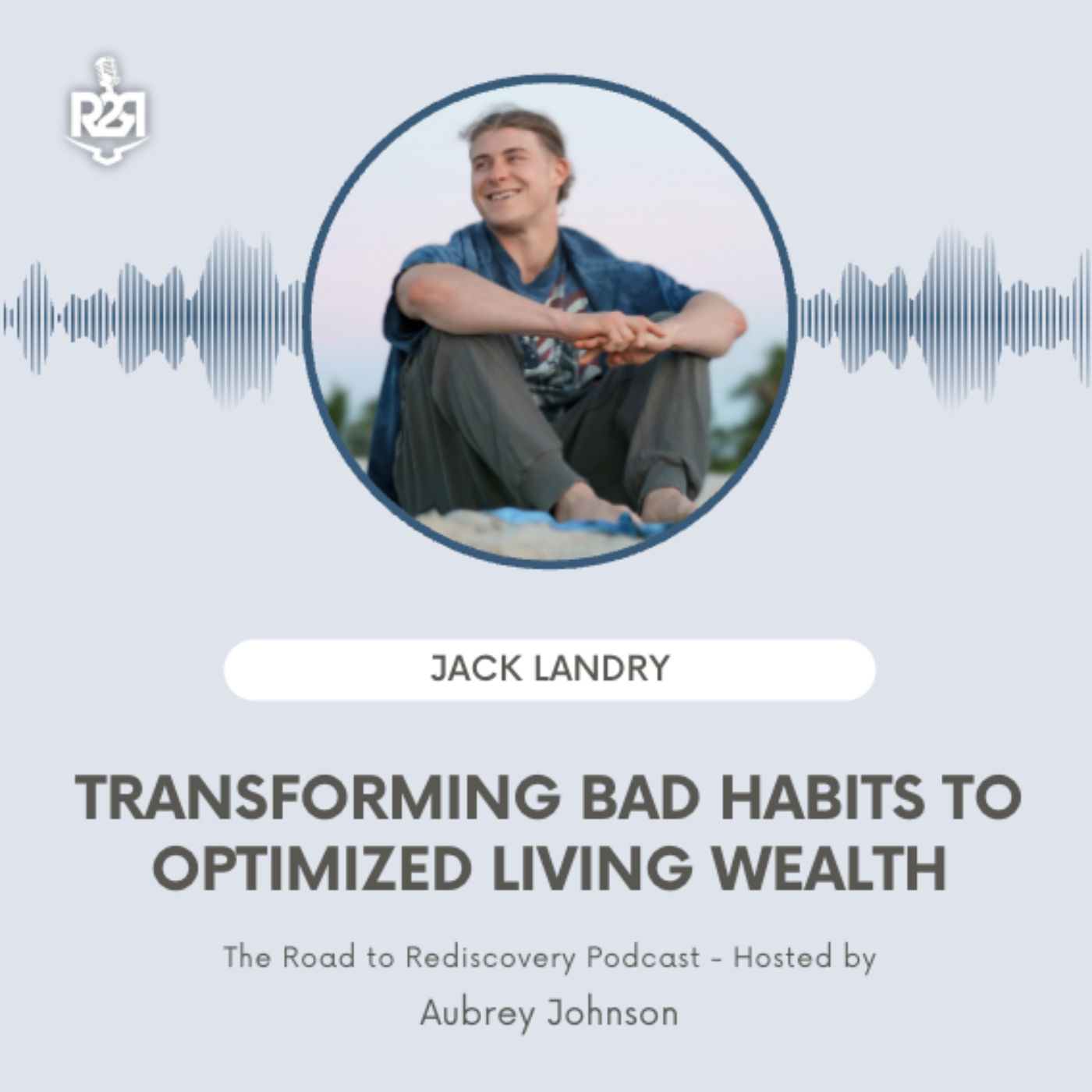
After reaching a burnout point as an Amazon Engineer, Jack Landry realized his true potential and destiny becoming a Transformational Coach and founder of his coaching company, Move.d.
As the go-to coach for high-achieving men such as Tech Founders, Finance Executives and Former Athletes, Jack shares with us the importance of not only banishing destructive habits and vices, but learning the methods and tools for replacing them with healthy routines that’s sustainable, transforming, and optimizes the body, mind, and spirit.
To connect with Jack, and learn more about his great work, follow him on:
DM Jack “REDISCOVERY” for one-on-one coaching and insight into his Morning Momentum Blueprint.
Like what you hear? Buy me a Coffee! Your support is ALWAYS appreciated!
Show Notes
After reaching a burnout point as an Amazon Engineer, Jack Landry realized his true potential and destiny becoming a Transformational Coach and founder of his coaching company, Move.d.
As the go-to coach for high-achieving men such as Tech Founders, Finance Executives and Former Athletes, Jack shares with us the importance of not only banishing destructive habits and vices, but learning the methods and tools for replacing them with healthy routines that’s sustainable, transforming, and optimizes the body, mind, and spirit.
To connect with Jack, and learn more about his great work, follow him on:
DM Jack “REDISCOVERY” for one-on-one coaching and insight into his Morning Momentum Blueprint.
Show Transcript
This is Courtney Gray, Life and Body Coach. It is my pleasure to welcome you to another episode of the Road to Rediscovery podcast with Aubrey Johnson. Happy listening. Our lives are laid out on a road of bumps, turns, struggles and more.
How do we respond? How do we endure adversity for learning and growth? I'm Aubrey Johnson and we'll explore these questions and more on the Road to Rediscovery. Hello everyone and welcome to another episode of the roads rediscovery.
I'm your host Aubrey Johnson The roads rediscovery is about reflecting on life lessons to learn and grow from them And of course pay it forward and uplift others who are struggling through dark times Now I have some good news to share with you. The roads rediscovery stand store is now officially open That's right. Inspired by this podcast and the insights from our many amazing guests, we have all sorts of resources targeting your personal growth from free e -guides to eBooks to the full blown rediscovery roadmap digital course. Get on the road to overcoming your adversities and realizing your true potential by visiting us at stan.
dot store slash road to rediscovery. That's stan dot store slash road number two rediscovery. And as always, we are so, so very grateful for your listenership. All right.
My special guest was an Amazon engineer who reached burnout and over time realized his potential and destiny in becoming a transformation expert and building his elite coaching company move dot D. where he helps six figure professionals drop destructive vices, such as alcohol, drugs, porn, gambling, all sorts of things, and hustle culture as well. We're going to dig into that. He helps them build consistent habits and reconnect with their faith.
Ladies and gentlemen, let's welcome Mr. Jack Landry to the show. Jack, welcome to the show. It's so great to have you here.
Aubrey thanks so much I'm super excited to be here and I just appreciate you creating this space and on the road to rediscovery and bringing on people who can can share a message that's going to hopefully be a light and an encouragement for other people so I'm hopefully helping hoping to do the same today. Well thank you so much Jack we reciprocate we're very excited to have you here we are just salivating at the potential insights and knowledge that you will share and impart with us. Some from your own personal journey and some from just experiences and working with some of your clients. So Jack, if we can start by just sharing with the listeners for their benefit, what was the source of your inspiration behind becoming a transformation coach and starting move .d?
Sure. Yeah, one of the great things about transformation is leadership. And I've been able to step into that role. So I just actually want to create an opportunity for your audience.
And I first want to say once again, Aubrey, thank you so much for creating this space and this platform. because I was once in a place where I felt like I wasn't sure where I wanted to go. And there may not have been hope for me. So just even in the word rediscovering, that's exactly what you're doing.
And because of that, the first thing I'm going to do is I'm going to go drop you a five star review after this episode on Apple podcasts. So I want to encourage your audience to do the same, especially if they get some value. I'm going to do that as soon as we finish up. And yeah, back to the question of kind of how I got into the transformational coaching.
And it was really because I had experienced my own transformation. I realized what my life looked like was only going to be a reflection of the work I had done within myself. So I really started that journey when I got out of college and it was a three to five year road until I stepped into the position of coaching. And I'm happy to go into the details of wherever you're interested there.
Gotcha, gotcha. Well, yeah, basically beyond college or after college, right? I think the listeners are really interested in maybe a little bit of your time with Amazon and what caused the burnout, right? And whether or not that burnout was part of the spark.
or the inspiration for becoming a transformational coach? Yeah. Yeah, I think for so many of us, we get so invested in our career because some of the time we have a passion for it. At that time for me, I enjoyed the building aspect of what I was doing, software engineering, architecting, you know, coming up with the final vision and putting the pipes together.
I didn't really enjoy the hands -on work. I always knew there was something more because I wasn't on fire for the work I did. But regardless, we still get invested in what we do, largely because this is what brings food to the table. It's how we survive.
So it ends up taking up so much of our time. And when I was looking around while I was at Amazon, It felt very competitive, but not in a team way. It felt like I was competing one on one versus every other person within the company. And what that did is it created a lot of comparison within myself where my reflection was always external.
And regardless of where we are, we could be making the most money possible in the best shape possible, have incredible relationships. There's always somebody who we could say is doing better than us or who's doing it different than us. Yeah. So I found myself in this cycle of constantly feeling like I didn't measure up.
And then in that same breath, I continued to set this bar for myself, this hypothetical bar that I was never reaching. So I always felt inadequate. I was always asking myself, am I doing enough? And because of that, I had a lot of anxiety around work because I did want to perform and I was showing up and I was working hard, but even then I still didn't feel like I was enough.
And I got to a point where I knew there was a version of me that could show up and could go to sleep at the end of the night and feel confident in the day I just had. And that is kind of where I started seeking to develop the mindset, to develop the habits and the routines and the skills to not only do something I was more passionate about, but also do something and show up in a way day to day where I felt okay with how I was showing up and I was confident and secure in the individual I was showing up as every day. So that was kind of the beginning of me realizing the burnout was actually seeing that a lot of this burnout is coming from the competition in the comparison that I'm finding around me. And really what I need to do is look within me.
Oh, a thousand percent, a thousand percent, Jack. I mean, we had a past episode years ago called comparative thinking and just, you know, just the detriment and some of the damage that, you know, that does and that we do to ourselves. But in a lot of cases, you know, we think we're doing it or people think we're doing it to ourselves, but sometimes the environment can kind of foster or create that way of thinking, right? Like you said, in that work environment you had there, it was like you against the others.
And then you start to think about, you know, feeling inadequate and anxious and whether or not you measured up. And then I would imagine I'm just guessing some degree of imposter syndrome kind of trickles in, right? Definitely. Wow.
Yeah, that's amazing. But one thing that you mentioned there, Jack, that sparked an interest in me that I found fascinating that you mentioned is, and I'm paraphrasing here, but it seemed like you were teetering right on that edge where. you were having these feelings of inadequacy, not quite measuring up or feeling you didn't measure up, but at the same time, you knew you were capable. You knew that you do show up.
You acknowledge that you do work hard. And so just being right on that teetering edge of the fence, just taking the action to jump on the side of self -empowerment, the side of self -esteem, the side of building self -respect and removing those toxic thoughts. And it sounds like you took that plunge by leaving the company. Is that accurate or?
Yeah, actually kind of the trigger point for me was I got to the place where it was time for a promotion and actually their process internally at Amazon is you have to write your own promotion letter Yeah, which results in you having to get connected with multiple different people having them write you letters Yeah, you have to do a lot of work yourself and the the I told myself I'm gonna go somewhere else and. have more value come into me with a higher paycheck and something that I enjoy doing more. And I'm going to provide my value to a company that's willing to see that. And that doesn't really ask me to prove it a second time.
So that was kind of my initial spark where I was like, all right, instead of writing my promotion letter over a period of four months, I'm just going to go and get a promotion somewhere else. And that's what I did.
And that's where I first entered into the self self -employed work workspace and When and worked for myself and ended up taking on a big contract and that's when I started my first business I'm doing consulting work and once again that was something where people were like are you sure you want to leave corporate because if you leave corporate that's gonna put a bad mark on your resume and Once again people had opinions about what was best but I had a strong conviction that there was a good opportunity for me So I took that leap of faith and knew that as long as I showed up for it Then the opportunity would present me with something good You know, that's a tremendous amount of faith as well, right?
I mean you focus on taking care of one thing which is in your control the things and elements that you can control And having the faith, the faith in yourself, the faith in your creator, your faith in God, that everything else will fall into place as long as you're obedient, as long as you show up, as long as you do your best. Everyone wants to do the best they possibly can. Everyone wants to provide for their family. You want to put food on the table.
And you should, to your point, only have to prove yourself one time, not in some letter that you write, hyping yourself up, but in the true work that matters and moves the business, right? So I love your thought pattern when it came to just rationalizing that out at the time a promotion opportunity came up at Amazon. And who would have known? A promotion opportunity that comes up there is really the springboard to what you're doing now.
Yeah. I would have never expected it to be that way. But that was kind of my opportunity where I felt a little bit fed up. And I just kind of felt like a number in the system.
I knew that wherever I went, whatever I decided to do, the same effort and intention that I was bringing to each day there was going to be brought to something else. That's why I had the faith that I could make whatever it was work. That's great. That's fantastic, Jack.
I'm so happy for you. I want to thank you for giving us a glimpse into your journey and what inspired you. to take that plunge and to take that leap and and lead you to where you are today. So now I want to talk a little bit about your work that you do with high achieving men who go through a number of stressors and stress factors, whether they are running a multimillion or multibillion dollar company, and they have a family they're providing for at home.
And they have a series of Just other issues in other areas and different things that they need to tend to Trying to keep all those balls up in the air and be the consultant for them in helping them Be the most optimal person they can to to to perform Keeping the balls in the air so to speak. So the first question I want to ask you is regarding, you know, just if you've detected a pattern in some of the habits or vices they fell into, and then after that, we're going to talk about just some of the healthy ways that we can put those vices aside or substitute them for something. I wanted to just ask you here, people from all walks of life, we all have vices, and that's just the human truth, I guess.
for high achieving men in their field who are quite successful is there a common trend as to why men resort To the these specific vices right the alcohol the drugs the porn You know and even hustle culture, which I want to touch on here in a little bit. I mean Do they feel that at their level that there's really? One they can who can relate to them and what they're feeling and going through so to blow off steam Its vices like these what's the rhyme or reason? for them resorting to these specific devices versus something else?
Yeah. Yeah, that's a great question. I appreciate you creating this space to have kind of this intimate conversation on a on a challenging topic. But these type of vices, typically the cause is a desire to escape.
And that comes from a lack of fullness, not feeling hole in the person's entire life. And I talk about my own situation for a second because I was there and it was coming out of college in my first job where I was making good money working for a company, Fidelity Investments, had a great career path going, was in okay shape. But really I knew like I had so much more potential and I wasn't Super motivated. I was lacking a little bit of the discipline and it was kind of the work hard play hard like oh my gosh Yes, nine to five and then on the weekends.
I would go out drink be blackout smoking weed yeah had a desire for an incredible wife which praise God I do I do have now but at that point like I was chasing hookups in using porn as an escape or a way to fill my loneliness. So really, when you look at success, you have to define it from this holistic perspective, because you could be making a million plus dollars a year. But if your body is not in good shape, if you have a lot of anxiety and stress, you're always overwhelmed, constantly quick to anger, then You're gonna have this lack of fulfillment this lack of purpose and feeling full and that's where we typically look to fill that emptiness with something else But it ends up only being a temporary solution It's like a band -aid fix and every time you rip that band -aid off every time you get off the drug or off the alcohol You know, it's even more pain.
So yeah, really what it ends up being is just What the person has done to find success in one area Has kept them from finding success in the other areas and success is all relative to the individual It doesn't mean you need to be spending time and have like what a lot of people will call balance, right? I don't really believe in balance what I like to talk about is harmony because you know for you Aubrey your time spent may look like 60 or 70 % of your time spent on work. And the other three distributed across your personal health, your family, your lifestyle, actually just enjoying and living life. So for each person, they need to find what that harmony looks like because the physical body is going to support a healthy mind.
A healthy mind is going to put you in a place where you are able to have a relationship with God, where you are able to have good relationships with your family, with your friends, with your colleagues at work. It's also a lot of people don't think. this way, because they're just like, I'm just going to work harder. But realistically, your body and mind being in a good place is going to put you in a place where you have more creativity, you have more enthusiasm, focus and energy when it does come to that thing that often is pulling people away from the other areas of life, which is their career.
And when that career is so demanding, that makes them fall into the vices because the other areas are empty. So yeah, it's really looking at like, where am I neglecting myself and trying to figure out how do I slowly date by day, pour a little bit of time and energy into those areas, set a firm foundation so that I have more of a sense of fullness and purpose with what I'm doing. I see. I see.
So in what you were explaining there, Jack, it sounds like some of the things and vices that these high qualified, high achieving men may resort to while they may appear on the surface as as a way to blow off steam or taking a break. It's really kind of countering the effort and work that they're doing in the waking hours, so to speak, in building this empire, in building their business, in building the fortune for their family, in building a legacy for their children, and these sorts of things, right? And it just sounds like there needs to be a mindset shift for these men. to come to that realization and see what more possibilities are at their disposal by letting this go, giving this up and that sort of things.
Is that what you were pretty much talking about there? Yeah, that's spot on Aubrey and it's not only that it needs to be let go of, but there also has to be something positive that comes in to fill that gap when you do let go of the vice. And really what it is is typically these men, they're just lacking systems. And most of them are probably pretty familiar with what I like to call a well operating, a well oiled machine, which is some type of system that's operating smoothly.
And a lot of the times you do see those in different areas of your business, there's multiple working at one time. And so it's trying to replicate that same process of systematizing and automating. a way for you to take care of your body, mind, your spirit, and your relationships. So yeah, that extraction, like you talked about, is completely necessary.
And then there's also that addition that sounds like we're going to talk about here in a moment. Absolutely. In fact, that's a great segue to get to that section. But I wanted to quickly ask before we go to that portion, Jack, is I have this sneaking suspicious feeling that in the world of vices that these men may resort to, one vice can kind of lead into another as they repeatedly commit, right?
I would think one, for example, would be if alcohol or booze is one, and they're getting into that or they're blowing off steam, then the booze alters the mind and it may alter the mind to the point where, I don't know, you're looking for prostitutes or you are going for porn or trying to find a hookup or something like that. The vices become, they almost, work against you, they stack up and work against you when you're exercising one and it trickles into the other because of the altered mindset. And it's just a slippery slope from there, it sounds like.
So yeah, so so in the work that you do, Jack, I have to commend you because in more than just introducing systems and methods and tools in how to how to make healthy choices in ways of blowing off steam for these high achieving men, there has to be some degree of a mindset shift or behavior shift that you have to kind of help navigate the waters with them through. And so we all need some way or some distraction to decompress. We all work hard. We want to provide for our families, you know, depending on most companies, corporate America or wherever, you know, even if you're self -employed, we must always allow ourselves some time for personal time, right?
Family, vacations, just time to decompress so we can be our best selves when we are working and serving. What are some of the healthy distractions for men that you Walk them through to help them reset and refresh and in addition to that Jack if you can also give us an example of just how you help them in that mindset shift of You know of freeing themselves from this vice whatever it is Yeah, because it's I think in their minds at that time. It's counterintuitive They're like, no, this is what I need to, to, to, to, to, to relax for a break when really it has a hold on them and freeing them of it will cause more opportunity, not less. Yeah.
Yeah. That, that, that, that that's great. And I think the beginning of it, like you said, you can put systems in place and programs and all that, but there's a deeper cause that we first need to get to. the root of and the problem really isn't even the vice.
The problem is the emotion that's causing the person to fall to using the vice. I see. And so it starts with first just an acknowledgement of this is where I'm where I am. This is the issue that I'm having and how it's expressing itself, how it's manifesting, and then identifying and acknowledging and accepting the root of the problem, which, you know, maybe it's a lack of confidence for a lot of men.
They have confidence in what they're doing with their job, but they don't have confidence in other areas of their image and who they are. So when they're out at a social hour, you know, their first thing they do is they order a drink because after a couple that gives them the confidence to socialize like they would. So it's not the alcohol that's the problem. It's the insecurity.
And as we dig down the levels of what the emotional problem is we get to it like is it um because you've maybe it can stem back to childhood like never got validation as a child sometimes it's just a physical appearance thing so it's really first doing that work to like understand where are we at um from an emotional standpoint and then getting the person to a place of either believing that there's a place that is better and painting that picture or having a desire for that place, because sometimes they don't believe it's better. And sometimes they don't actually desire it either. So it's like, if I don't desire it, I have to at least believe it's better. And if I don't believe it's better, there has to be a desire for something better.
And one of those two has to act as our almost our spark, our motivation to start doing something new. And So really when we go to the healthy habits that you're talking about The most important thing and I do this with all my one -on -one clients is we kind of put together what I call a morning momentum Blueprint because your morning that sets the tone for the rest of your day in this should be your Undisrupted time because of what it's letting you do is it's letting you get grounded if you do it right and you stay off your phone You stay off your laptop You don't engage in work then you're able to get to a place where you have peace and you have clarity and vision on what's coming ahead today. You also should be able to do something for yourself.
So whether it's as simple as go out for a walk or read 10 pages of a book or get in a workout like something to prime your body and mind to feel good, to feel energized to take on the day. So yeah, really getting to a place where you prime your body, mind and spirit to start the day. And I do that with all my guys. And actually, I'll talk about how anybody who's interested in doing that with me, kind of walking through their morning right now, figuring out how we can improve that and kind of set them up for a more successful day.
I'll talk about how we can do that at the end of the episode. But that's kind of the first part. And then I do see it as this pyramid where the physical body is at the bottom, the mind comes second and then everything else, your spiritual beliefs, your relationships, your career comes on top of that. So figuring out ways to nurture our physical body.
And once again, um fitting that to your life right it's hard to take your life and try to jam that into like a new program or a new system but what we like to do is build a system around your life and just to get your body moving um and also start to do some of the reflection depending on who it is some of the reflection to understand like you know why am i maybe feeling tempted to go out and drink at the bar tonight or to go gamble and start to become aware of the triggers. nurturing your body through movement, but also a healthy nutrition. Um, cause that's going to put you in a place where like your energy, your focus, your clarity is going to be elevated your mood as well.
And then with that physical body being in a good place, let's take, let's figure out some ways to take care of your mind, whether it's like a journaling or a meditation, um, or restorative walk, getting out in the morning or the evening, unplugging from all the distractions that we do have is really in powerful. So yeah, those are a hand. full of ways, kind of the some of the foundational stuff that I like to do. And then there's other ways to like get into the accountability and tracking in the systems behind, like, how do we remove a vice from somebody's life?
Like, for example, I have a guy who I'm working with at the moment, we're getting them off nicotine, and it's been kind of what I call an exponential back off approach where we're basically just week to week slowly decreasing the amount that he's using. Right. It sounds like a simple process at surface level, but like you talked about Aubrey, like we need to get to that real root cause because if you don't understand what's leading us to want to use or to want to escape our current reality, then we're never going to be able to actually follow the positive thing that we add to our life. That's exactly right.
And yeah, that root cause is what needs to be discovered or rediscovered in what it is. That's what needs to be addressed and not what appears to be the visual superficial cause, which is basically a coping mechanism or response to the root cause that that individual is doing. Um, so, so yeah, I, I'm in full agreement with you, Jack. Uh, I want to, I want to thank you for kind of clarifying just, um, what you look and what you look at and the layers that you peel in working with your clients and just the simple fact that, man, when you work on your body, you know, in the outside part of you.
with a good workout routine, a walk, maybe lift some weights, maybe stretches, meditation. There's a chemical reaction that happens with inside of you that really, really starts to clear some. some toxins in your mind and the way you think about things and perspectives and reframing that just slowly starts to happen as long as you keep it as a habit. I think it becomes a noticeable change of the man himself.
Yeah, I think it totally does. And there's one thing you mentioned, and I'm going to kind of segue, and we can talk about this later in the episode if you like, or you can speak to it now. I think you spoke mostly to it regarding the morning routines and morning rituals. I'm going to kind of selfishly ask you this question, Jack, because as my listeners know, I am not a morning person.
I think one of the reasons why I'm not a morning person, I appreciate and I respect mornings. To me, they're very sobering. To me, they're very much an opportunity to just get a jump on life when you hop out of bed. However, like you said, that day is impacted from the quality of sleep and the amount of sleep you've had from the night before.
And I think I'm not a morning person because I am a night owl. And being a night owl, to be with family and everything during the day and the waking hours, I want to be present. I want to be with them. But when everyone goes to sleep, I stay up and I do things like editing episodes and.
marketing and connecting with potential guests and clients and all this sort of thing. Right. So and I'm not I'm not implying anything about, you know, me being a six figure high achieving man. But but a lot of those men have established their businesses and their profession and the level that in which they hold from.
Two things, hustle culture and a lot of burning the candles late at night, right? So if we're talking about a very successful CIO of a tech company, let's say, this person has risen to the top from hard grinding, hustling every day, humble beginnings, just to, I mean, worked on a help desk and built... motherboards on the side or whatever, you know, and, and then, uh, countless late nights, burning the candles, doing that stuff on the side while working so they can get to the level in which they are today. And so now, you know, they're working with you to coach and to help build and adapt a morning routine.
How there has to be a way to your point. You said, you know, um, there, it has to fit into their lifestyle, right? They can't just take their life and jam it in like you mentioned, but is there a way, is it possible to build and adapt a morning routine for that person, not only so that they are the most optimal and have a great positive mindset, but also assures to them after so many years of having these late night habits, assures to them that there's no decline in productivity or decline in Just the just the state of their business. Yeah.
Yeah, I think that's an incredible question in. Ultimately, the person is only going to be able to evaluate whether or not this brings value to them if they actually implement it. Yes, and let it run its course. So that's the first thing is, you know, anybody who's a top performer has to have a mindset in this probably got them to that place, which is.
I constantly have to learn to evolve and to grow to become better because they're at the place that they are for a reason. And what got them there was not staying the same. So if I can realize that, then anything that can help me perform even better and do it with more energy left for myself and potentially more time for myself, I should be interested in that. What we're going to look at first is your schedule and figure out where would this actually fit from a time perspective?
What does that time increment look like? What's going to work in a sense that it empowers you and it doesn't take away from the other stuff that you're doing? And then hopefully. we can also look at are there areas where there is distraction so you know if you're doing two three hours of work in the morning before interacting with anybody in your office really what is the quality of that work like are you checking emails are you on the phone are you going back and forth or are you truly just focused on deep work because yeah There's this old belief in hustle culture that it's about the hours that I put in, but really it's not.
If you read the book by Cal Newport, he talks about the concept of deep work and it's how productive can I be in this segment when I remove all distractions? And when I started implementing that in my own life, what I could do in a four hour period. for a lot of days was longer was more work than I would do in an entire eight hour work day. So it's just being intentional with their time.
And then for somebody who is really not taking the time to slow down in the morning, or even the evening, they're going to start their day with chaos and disruption. It's impossible to not the first thing out of their The first thing in their mind when they wake up and get out of bed is like, what do I have to do? Right. And there's nothing healthy about that.
All that does is it puts you in a place where you're more reactive than you are responsive. Somebody who's in control, who's in who's a mature leader. They should have the ability to take a step back and respond to everything that's coming to them rather than being reactive. And part of that is actually putting yourself.
in the position to be resp something Aubrey and I im me being reactive. If I ta I have the ability to be m that's the exact opportun put in something small in understanding the value th and then giving it the ch it and following through the value that it brings The beginning stage is probably not going to be the end stage, right? This is something just like in your business, we want to iterate on it. So we may get only 85 % of the puzzle that works for you.
But that feedback loop in the beginning is going to give us exactly what we need to come up with something that's smooth and flows easily for you. Right, exactly. It's going to be iterative, right? And until it's tailored in such a way that works for you.
And so it sounds like you introduced to these high achievers that, hey, there is a way that you can have this. There is a way you can wake up ready to attack the day and prepared and optimal in your mind, in your mindset, in your body. and still be productive. In fact, be more productive while putting away or substituting those late night work as, you know, as it's defined, whether it's deep work or just filler by responding emails, replacing that with sleep.
and find yourself not only more optimal, but also more productive. And you're achieving more than you did the prior way. So introducing that possibility to them should pique their interests. And I imagine that it would.
So with that said, Jack, is there such a thing as, I mean, there is such a thing as hustle culture, but If that work that you're doing in those extra hours, whether it's a second job or whether it's a side thing you're trying to stand up on your own, if that's deep work that's iterative each night to get to that point, Is that a legitimate hustle? Is there a justification for having a hustle? I guess the connotation that society brings when it comes to hustle is someone who is just full of energy. They're on fire, they're motivated, they're inspired, and so forth.
And when you peel the layers of that person, it may be something otherwise. You know, but, um, the connotation of hustle culture, um, leads people to think, Oh man, they're on fire. They have all kinds of energy. How do they, how do they even get the energy to do that?
They're up all night, blah, blah, blah, you know? Um, yeah. So, so what are your, what are your thoughts on that, uh, uh, hustle? Is it needed?
Is there such a thing? Um, and, and, and what I mean is this Jack, um, Is it a, is it a misconception, I guess, because in my mind, an example of a misconception is multitasking. I don't believe in multitasking. I don't think there's a such thing as multitasking.
I mean, basically, you know, if we really focus on one thing at a time, the lesser focused item takes a backseat, right? It suffers. So you're not really multitasking. To me, that's a misconception.
In relation to that, I mean, where do you stand with hustle culture? Yeah, I agree with you on the multitasking for sure. And I do believe that there are periods and seasons where you're in a grind and you have to work hard and you can't just pull off a nine to five, 40 hours a work week. I went through that period before Amazon.
I was working my full -time job. I was taking two graduate courses at a time, was applying for new jobs at the same time. I also figured out time to spend in the morning though on myself. I was still in the gym.
I was still taking care of my nutrition and I would attribute my ability to do all of that, perform in my job, get a promotion within that job. perform in graduate school and interview and get multiple different job offers, I would attribute that to the ability to still pour into these other areas of my life. But there will be times in your life where, yeah, your hustle needs to be there depending on what your goals are. It's just not something that's sustainable over a long period of time.
And The misconception is that it's going to hustle is going to get you to where you want to be faster. But a lot of the time it's actually holding you back because what you can do on eight hours of sleep versus five hours of sleep. in two hours of extra work the night before is 10 times better than what you did prior with the couple extra hours in the evening, and then the lack of sleep rolling into the day. So yeah, it's really working on being optimal and working smarter, not harder.
Sure, the hours and the effort put in matter, and there's periods of our life where that needs to be extended, and we do have to take away from areas of life. like comes back to that harmony that I talked about at the beginning. Maybe you're spending 10 % of your time on your physical body. on a regular week.
Maybe you need to get a new pro or you're working on that I was in that same place building my coaching busi week, building the coachi So maybe those workouts t like an hour a day, those You can't completely neglect everything though. You can, but it's only gonna last for a short amount of time. And the results, they're gonna diminish because your level of output, you're never gonna be able to sustain that for every season of life. So that's like, how can you actually sustain your highest level of output?
And typically these other areas of life need to be at least considered for you to get there. Yeah, no, that that makes all kinds of sense. And yeah, no, you can't just neglect and just put your hands up and and say, I'm doing nothing for a while. It's not it is not sustainable.
And and yeah, I mean, over time, I think we find ourselves kind of adjusting the percentages. I don't know. I can't even equate it to my mixing board here. So my mixing board has like, you know, these, these, these dials that go up and down.
Right. And, and you push them up, push them down a hundred percent top, zero percent bottom. And, you know, one of them could be labeled working out. The other can be labeled family.
The other label work. Right. And as time goes on, you know, you, you may have like in my twenties, I was in the gym like four days a week for two and a half hours. But as I get older, other parts of life and facets of life set in, I have to take that adjuster on that mixing board that says, Jim, kick that down a few notches.
But not to get rid of altogether. Just kick it down right so and and yeah I think that's just one of the realities of life as we go through and get older and Become more comfortable in who we are and in what elements of our life requires our most attention and we gain the wisdom as we get older in what is prioritized right And and and and we can't we can't we can't get wiser and develop and discover what's prioritized by following bad vices. Sure, we're getting older, but we're following bad vices. So where's that wisdom in there, right?
So, yeah, so I think I'm very much on board with what you're saying here in how we get to a safer, healthier alternatives. for developing habits, good choices, and optimizing ourselves for a clearer mind, more energy, better sleep, and just an overall better lifestyle. This is absolutely tremendous, Jack. Finally, I wanted to ask you, men have the propensity to suffer in silence when it comes to certain things.
And it could be for a variety of reasons. It could be pride. It could be fear of appearing vulnerable. It could be embarrassment.
So suffering in silence with whatever vice that has a hold on them, or suffering in silence with whatever they're going through that's making themselves feel vulnerable. I find this to be quite the consistency. in men from generation to generation to generation. However, I do believe over the past 20 years or so, men are becoming more open -minded and receiving to mental health and to opening up and to admitting they need help and that sort of thing.
Do you think there's a shift that has been happening that can help more men of all walks of life to adapt these healthy choices and habits to where it becomes more of a it becomes more the rule than the exception of men coming together and talking. Yeah, that's a really powerful statement, Aubrey, and I appreciate you saying it. And there's so much truth to it. And I've seen it myself, so I'll be 30 this year.
And even growing up, kind of the culture around manhood was we're men, we're not supposed to cry, we're not supposed to have emotions. Yeah. I started to understand all of my emotional problems, which were like anxiety. I struggled a lot with insecurity.
And I realized the first problem that I had to address was My emotions within myself i hadn't even acknowledged accepted my own emotions and that was the number one step to healing in living in true freedom true confidence not living in society so when i started to dive into that. Side of mental health i started to realize wow actually a powerful man is one who is in tune with understands and can express his emotions and create. a vulnerable space for other men and there's so much power and vulnerability and I was in that exact place that you talked about where I did suffer in silence because a little story for the audience the way I grew up I had incredible parents and I was the oldest of six they always taught us we were capable of getting A's so basically we all got A's and if we weren't getting A's there was a case here and there where like it made sense why we weren't.
But for the most part, it was more of an effort issue. And what that showed me was if I had a vision and a goal, I was capable of setting my mind to it and achieving it if I showed up and put in the time and effort. And so when I grew up and got into adulthood, into the working world, that was my mindset towards everything else. I was like, if I'm not there, All I have to do is work harder, acquire more knowledge, or put in more time and effort.
And then I got to a point where I looked at some of the top performers in every single area. I'm from Massachusetts and played football my whole life, so I like to use Tom Brady. Look at top performers in business and athletics, and if you look at those guys, they're surrounded by the best of the best, all the best mentors and coaches. especially as they get older and they get better, they have even more mentors around them and even better mentors around them.
So that's when I kind of made this shift into there's so many people who have already walked the path that I've that I want to walk and who can help me. Right. And actually, what it does is it's showing power and strength on my end for me to say from a position of humility, I'm not there yet right now. And that's OK.
But I'm going to acknowledge that. And I'm also going to put myself where I'm willing to ask for and accept help. And that's when I first started investing in myself. I've had probably two fitness health coaches.
multiple business coaches. And yeah, I just realized that there's people who want to help me. But also, there's a guy who came from a very similar situation to me and has done exactly what I want to do. And it's just stubbornness and insecurity, pride, arrogance, ego that are keeping me from reaching out and getting that help.
So once I made that switch, it's just not only built so many more relationships and uh, just surrounded me with powerful men in community, but it's also 10 X my growth, my maturity and development in so many areas. Oh, for sure. And it increased your power as well. You know, it really has.
And it's, it's freeing to get that monkey off your back of arrogance ego, right? To, to, to, to practice humility and, and to surround yourself with that expertise. One thing I have always been told, success does not happen on an island. No one person is successful because of themselves.
It's all the people in the path of their journey that they've encountered. It's that elite group of individuals and mentors that you mentioned that makes it possible, that makes it happen. Anyone you name. Michael Jordan, Tom Brady, Hank Aaron, any of them.
And that's the truth. That's the truth. So, oh man, this is fabulous, Jack. How can the listeners contact you or get in connection with you or learn more about the great work that you're doing in just transforming the lives of such high achieving successful men?
Yeah, I just want to thank you again, Aubrey, for creating this space and for the rediscovery aspect of it, especially because there's a lot of us. I've been there. We feel down now. We feel discouraged.
We feel lost. And this is the exact spark that people need. I needed it at a point in my life. I still need a little bit of that reinvigoration, that...
Rebelief when I'm going through my own valley So I thank you for that and I appreciate you leading and always providing so much value and I want to kind of do the same for your audience so What I want to do actually let me do two things is the first thing I want to do is let me talk about who it's probably best for so that they understand and Yeah, it's that guy who feels like he's doing pretty well life on paper looks good, but he knows Every night he goes home like there's so much more and he has such a desire for a more fulfilled life, a more purposeful life. And maybe it's just lack of motivation or discipline that's holding him back or just lack of clarity on the next steps, maybe feeling disconnected with God or himself. Then this is the type of guy who it's probably best for because that's where I was.
The first thing I want to do is what we talked about earlier, which is my morning momentum blueprint. So anybody who's really struggling with getting through the day and doing the other things that are important, taking care of their body, taking care of their mind. If you're always feeling stressed and anxious, feeling like you're never getting everything done, then this is probably something that could be massively impactful for you to align your body, mind and spirit for you to start the day where, okay, I'm in control. I'm not going to be reactive through my day.
I'm going to be purposeful and intentional. And we're going to start your day that way. So if you want to do that, I'll show you how you can get connected with me. We'll build out a morning momentum blueprint for you completely free.
And then something else I typically usually only do with my one -on -one elite clients, but I want to open it up for your audiences. I do what's called a move different strategy session. And really what we're doing there is we're looking at where you are right now in your in your life and then we're looking at where would you like to be in six months physically, mentally, within your career, in your relationships? Where exactly do you want to be?
What obstacles are there? So maybe there's some vices. Maybe it's your All your time and energy is just being spent on your work and you haven't figured out how to spend time on the other things. Whatever it is we look at the obstacles that are holding you back and then we come up with a step -by -step exact game plan to get you moving in that direction of accomplishing those goals within six months with clear KPIs, clear systems that you can follow and also measure your success and your growth.
So if you want to do that both the morning momentum blueprint and the move different strategy session The best place to get connected with me is definitely on Instagram. You can find me Jack P Landry on Instagram and probably you can just search Jack Landry. You'll find me. I have just over 70 ,000 followers.
So message me the word on why don't we do rediscovery. So if you want to do the morning momentum blueprint in the strategy session, message me rediscovery. So I know you're coming from Aubrey's show. That would be awesome.
And we'll do both of those together. Once again, it's Jack P. Landry on Instagram. So thank you so much for the opportunity, Aubrey.
Absolutely. Absolutely. We will do exactly just that. We'll have the instructions on how you can connect with Jack on Instagram, Jack P Landry on Instagram, and the instructions of just the DM word, rediscovery.
Use that word and that will connect you with Jack for the morning momentum. and for the other reinvigorating methods and tools and practices that he will walk you through. We'll make sure all that information is on the episode show notes so that you can follow those instructions while listening to this wonderful, insightful conversation. Jack Landry, I want to thank you so much for coming on the show.
You are a force. In the universe for good. I want to Ask hopefully we could stay in touch and bring you on the show in the near future with any updates. Yeah Would be lovely.
Yeah. Thank you again so much Aubrey for for paving the way and creating this spark in this encouragement for people It's something I've needed. I still always need it and I appreciate you Absolutely. Thank you Jack and I want to thank all of you for tuning in and listening and look you may feel like this at times But in our daily struggles and adversities, we're never alone.
And hope is always just around the corner. I humbly ask that you please share this show with someone you know, someone you love, who needs motivation, inspiration, and support. And you know, when it all comes down to it, we're just all roadies on this journey of life. But it sure feels good having you on the road with me.
Thanks again for listening. We'll chat again soon. We really hope you enjoyed this episode of the Rhodes Rediscovery. We'd love to hear from you.
Shoot us an email at RhodesRediscoveryPodcast at gmail .com and leave us any questions or comments you may have.
Listen On
Also In Season 11
-
Servant Leadership and Growth: Lessons from John Marvin
Hey there! Leave me a voicemail with any feedback or questions!As the CEO and P -
Teaching Women how to Reclaim their Voice - Gina Hatzis
Hey there! Leave me a voicemail with any feedback or questions!Gina Hatzis is a -

Behind the Scenes of Success
Hey there! Leave me a voicemail with any feedback or questions!In an outcome, r
Transcript
This is Courtney Gray, Life and Body Coach. It is my pleasure to welcome you to another episode of the Road to Rediscovery podcast with Aubrey Johnson. Happy listening. Our lives are laid out on a road of bumps, turns, struggles and more.
How do we respond? How do we endure adversity for learning and growth? I'm Aubrey Johnson and we'll explore these questions and more on the Road to Rediscovery. Hello everyone and welcome to another episode of the roads rediscovery.
I'm your host Aubrey Johnson The roads rediscovery is about reflecting on life lessons to learn and grow from them And of course pay it forward and uplift others who are struggling through dark times Now I have some good news to share with you. The roads rediscovery stand store is now officially open That's right. Inspired by this podcast and the insights from our many amazing guests, we have all sorts of resources targeting your personal growth from free e -guides to eBooks to the full blown rediscovery roadmap digital course. Get on the road to overcoming your adversities and realizing your true potential by visiting us at stan.
dot store slash road to rediscovery. That's stan dot store slash road number two rediscovery. And as always, we are so, so very grateful for your listenership. All right.
My special guest was an Amazon engineer who reached burnout and over time realized his potential and destiny in becoming a transformation expert and building his elite coaching company move dot D. where he helps six figure professionals drop destructive vices, such as alcohol, drugs, porn, gambling, all sorts of things, and hustle culture as well. We're going to dig into that. He helps them build consistent habits and reconnect with their faith.
Ladies and gentlemen, let's welcome Mr. Jack Landry to the show. Jack, welcome to the show. It's so great to have you here.
Aubrey thanks so much I'm super excited to be here and I just appreciate you creating this space and on the road to rediscovery and bringing on people who can can share a message that's going to hopefully be a light and an encouragement for other people so I'm hopefully helping hoping to do the same today. Well thank you so much Jack we reciprocate we're very excited to have you here we are just salivating at the potential insights and knowledge that you will share and impart with us. Some from your own personal journey and some from just experiences and working with some of your clients. So Jack, if we can start by just sharing with the listeners for their benefit, what was the source of your inspiration behind becoming a transformation coach and starting move .d?
Sure. Yeah, one of the great things about transformation is leadership. And I've been able to step into that role. So I just actually want to create an opportunity for your audience.
And I first want to say once again, Aubrey, thank you so much for creating this space and this platform. because I was once in a place where I felt like I wasn't sure where I wanted to go. And there may not have been hope for me. So just even in the word rediscovering, that's exactly what you're doing.
And because of that, the first thing I'm going to do is I'm going to go drop you a five star review after this episode on Apple podcasts. So I want to encourage your audience to do the same, especially if they get some value. I'm going to do that as soon as we finish up. And yeah, back to the question of kind of how I got into the transformational coaching.
And it was really because I had experienced my own transformation. I realized what my life looked like was only going to be a reflection of the work I had done within myself. So I really started that journey when I got out of college and it was a three to five year road until I stepped into the position of coaching. And I'm happy to go into the details of wherever you're interested there.
Gotcha, gotcha. Well, yeah, basically beyond college or after college, right? I think the listeners are really interested in maybe a little bit of your time with Amazon and what caused the burnout, right? And whether or not that burnout was part of the spark.
or the inspiration for becoming a transformational coach? Yeah. Yeah, I think for so many of us, we get so invested in our career because some of the time we have a passion for it. At that time for me, I enjoyed the building aspect of what I was doing, software engineering, architecting, you know, coming up with the final vision and putting the pipes together.
I didn't really enjoy the hands -on work. I always knew there was something more because I wasn't on fire for the work I did. But regardless, we still get invested in what we do, largely because this is what brings food to the table. It's how we survive.
So it ends up taking up so much of our time. And when I was looking around while I was at Amazon, It felt very competitive, but not in a team way. It felt like I was competing one on one versus every other person within the company. And what that did is it created a lot of comparison within myself where my reflection was always external.
And regardless of where we are, we could be making the most money possible in the best shape possible, have incredible relationships. There's always somebody who we could say is doing better than us or who's doing it different than us. Yeah. So I found myself in this cycle of constantly feeling like I didn't measure up.
And then in that same breath, I continued to set this bar for myself, this hypothetical bar that I was never reaching. So I always felt inadequate. I was always asking myself, am I doing enough? And because of that, I had a lot of anxiety around work because I did want to perform and I was showing up and I was working hard, but even then I still didn't feel like I was enough.
And I got to a point where I knew there was a version of me that could show up and could go to sleep at the end of the night and feel confident in the day I just had. And that is kind of where I started seeking to develop the mindset, to develop the habits and the routines and the skills to not only do something I was more passionate about, but also do something and show up in a way day to day where I felt okay with how I was showing up and I was confident and secure in the individual I was showing up as every day. So that was kind of the beginning of me realizing the burnout was actually seeing that a lot of this burnout is coming from the competition in the comparison that I'm finding around me. And really what I need to do is look within me.
Oh, a thousand percent, a thousand percent, Jack. I mean, we had a past episode years ago called comparative thinking and just, you know, just the detriment and some of the damage that, you know, that does and that we do to ourselves. But in a lot of cases, you know, we think we're doing it or people think we're doing it to ourselves, but sometimes the environment can kind of foster or create that way of thinking, right? Like you said, in that work environment you had there, it was like you against the others.
And then you start to think about, you know, feeling inadequate and anxious and whether or not you measured up. And then I would imagine I'm just guessing some degree of imposter syndrome kind of trickles in, right? Definitely. Wow.
Yeah, that's amazing. But one thing that you mentioned there, Jack, that sparked an interest in me that I found fascinating that you mentioned is, and I'm paraphrasing here, but it seemed like you were teetering right on that edge where. you were having these feelings of inadequacy, not quite measuring up or feeling you didn't measure up, but at the same time, you knew you were capable. You knew that you do show up.
You acknowledge that you do work hard. And so just being right on that teetering edge of the fence, just taking the action to jump on the side of self -empowerment, the side of self -esteem, the side of building self -respect and removing those toxic thoughts. And it sounds like you took that plunge by leaving the company. Is that accurate or?
Yeah, actually kind of the trigger point for me was I got to the place where it was time for a promotion and actually their process internally at Amazon is you have to write your own promotion letter Yeah, which results in you having to get connected with multiple different people having them write you letters Yeah, you have to do a lot of work yourself and the the I told myself I'm gonna go somewhere else and. have more value come into me with a higher paycheck and something that I enjoy doing more. And I'm going to provide my value to a company that's willing to see that. And that doesn't really ask me to prove it a second time.
So that was kind of my initial spark where I was like, all right, instead of writing my promotion letter over a period of four months, I'm just going to go and get a promotion somewhere else. And that's what I did. And that's where I first entered into the self self -employed work workspace and When and worked for myself and ended up taking on a big contract and that's when I started my first business I'm doing consulting work and once again that was something where people were like are you sure you want to leave corporate because if you leave corporate that's gonna put a bad mark on your resume and Once again people had opinions about what was best but I had a strong conviction that there was a good opportunity for me So I took that leap of faith and knew that as long as I showed up for it Then the opportunity would present me with something good You know, that's a tremendous amount of faith as well, right? I mean you focus on taking care of one thing which is in your control the things and elements that you can control And having the faith, the faith in yourself, the faith in your creator, your faith in God, that everything else will fall into place as long as you're obedient, as long as you show up, as long as you do your best.
Everyone wants to do the best they possibly can. Everyone wants to provide for their family. You want to put food on the table. And you should, to your point, only have to prove yourself one time, not in some letter that you write, hyping yourself up, but in the true work that matters and moves the business, right?
So I love your thought pattern when it came to just rationalizing that out at the time a promotion opportunity came up at Amazon. And who would have known? A promotion opportunity that comes up there is really the springboard to what you're doing now. Yeah.
I would have never expected it to be that way. But that was kind of my opportunity where I felt a little bit fed up. And I just kind of felt like a number in the system. I knew that wherever I went, whatever I decided to do, the same effort and intention that I was bringing to each day there was going to be brought to something else.
That's why I had the faith that I could make whatever it was work. That's great. That's fantastic, Jack. I'm so happy for you.
I want to thank you for giving us a glimpse into your journey and what inspired you. to take that plunge and to take that leap and and lead you to where you are today. So now I want to talk a little bit about your work that you do with high achieving men who go through a number of stressors and stress factors, whether they are running a multimillion or multibillion dollar company, and they have a family they're providing for at home. And they have a series of Just other issues in other areas and different things that they need to tend to Trying to keep all those balls up in the air and be the consultant for them in helping them Be the most optimal person they can to to to perform Keeping the balls in the air so to speak.
So the first question I want to ask you is regarding, you know, just if you've detected a pattern in some of the habits or vices they fell into, and then after that, we're going to talk about just some of the healthy ways that we can put those vices aside or substitute them for something. I wanted to just ask you here, people from all walks of life, we all have vices, and that's just the human truth, I guess. for high achieving men in their field who are quite successful is there a common trend as to why men resort To the these specific vices right the alcohol the drugs the porn You know and even hustle culture, which I want to touch on here in a little bit. I mean Do they feel that at their level that there's really?
One they can who can relate to them and what they're feeling and going through so to blow off steam Its vices like these what's the rhyme or reason? for them resorting to these specific devices versus something else? Yeah. Yeah, that's a great question.
I appreciate you creating this space to have kind of this intimate conversation on a on a challenging topic. But these type of vices, typically the cause is a desire to escape. And that comes from a lack of fullness, not feeling hole in the person's entire life. And I talk about my own situation for a second because I was there and it was coming out of college in my first job where I was making good money working for a company, Fidelity Investments, had a great career path going, was in okay shape.
But really I knew like I had so much more potential and I wasn't Super motivated. I was lacking a little bit of the discipline and it was kind of the work hard play hard like oh my gosh Yes, nine to five and then on the weekends. I would go out drink be blackout smoking weed yeah had a desire for an incredible wife which praise God I do I do have now but at that point like I was chasing hookups in using porn as an escape or a way to fill my loneliness. So really, when you look at success, you have to define it from this holistic perspective, because you could be making a million plus dollars a year.
But if your body is not in good shape, if you have a lot of anxiety and stress, you're always overwhelmed, constantly quick to anger, then You're gonna have this lack of fulfillment this lack of purpose and feeling full and that's where we typically look to fill that emptiness with something else But it ends up only being a temporary solution It's like a band -aid fix and every time you rip that band -aid off every time you get off the drug or off the alcohol You know, it's even more pain. So yeah, really what it ends up being is just What the person has done to find success in one area Has kept them from finding success in the other areas and success is all relative to the individual It doesn't mean you need to be spending time and have like what a lot of people will call balance, right? I don't really believe in balance what I like to talk about is harmony because you know for you Aubrey your time spent may look like 60 or 70 % of your time spent on work. And the other three distributed across your personal health, your family, your lifestyle, actually just enjoying and living life.
So for each person, they need to find what that harmony looks like because the physical body is going to support a healthy mind. A healthy mind is going to put you in a place where you are able to have a relationship with God, where you are able to have good relationships with your family, with your friends, with your colleagues at work. It's also a lot of people don't think. this way, because they're just like, I'm just going to work harder.
But realistically, your body and mind being in a good place is going to put you in a place where you have more creativity, you have more enthusiasm, focus and energy when it does come to that thing that often is pulling people away from the other areas of life, which is their career. And when that career is so demanding, that makes them fall into the vices because the other areas are empty. So yeah, it's really looking at like, where am I neglecting myself and trying to figure out how do I slowly date by day, pour a little bit of time and energy into those areas, set a firm foundation so that I have more of a sense of fullness and purpose with what I'm doing. I see.
I see. So in what you were explaining there, Jack, it sounds like some of the things and vices that these high qualified, high achieving men may resort to while they may appear on the surface as as a way to blow off steam or taking a break. It's really kind of countering the effort and work that they're doing in the waking hours, so to speak, in building this empire, in building their business, in building the fortune for their family, in building a legacy for their children, and these sorts of things, right? And it just sounds like there needs to be a mindset shift for these men.
to come to that realization and see what more possibilities are at their disposal by letting this go, giving this up and that sort of things. Is that what you were pretty much talking about there? Yeah, that's spot on Aubrey and it's not only that it needs to be let go of, but there also has to be something positive that comes in to fill that gap when you do let go of the vice. And really what it is is typically these men, they're just lacking systems.
And most of them are probably pretty familiar with what I like to call a well operating, a well oiled machine, which is some type of system that's operating smoothly. And a lot of the times you do see those in different areas of your business, there's multiple working at one time. And so it's trying to replicate that same process of systematizing and automating. a way for you to take care of your body, mind, your spirit, and your relationships.
So yeah, that extraction, like you talked about, is completely necessary. And then there's also that addition that sounds like we're going to talk about here in a moment. Absolutely. In fact, that's a great segue to get to that section.
But I wanted to quickly ask before we go to that portion, Jack, is I have this sneaking suspicious feeling that in the world of vices that these men may resort to, one vice can kind of lead into another as they repeatedly commit, right? I would think one, for example, would be if alcohol or booze is one, and they're getting into that or they're blowing off steam, then the booze alters the mind and it may alter the mind to the point where, I don't know, you're looking for prostitutes or you are going for porn or trying to find a hookup or something like that. The vices become, they almost, work against you, they stack up and work against you when you're exercising one and it trickles into the other because of the altered mindset. And it's just a slippery slope from there, it sounds like.
So yeah, so so in the work that you do, Jack, I have to commend you because in more than just introducing systems and methods and tools in how to how to make healthy choices in ways of blowing off steam for these high achieving men, there has to be some degree of a mindset shift or behavior shift that you have to kind of help navigate the waters with them through. And so we all need some way or some distraction to decompress. We all work hard. We want to provide for our families, you know, depending on most companies, corporate America or wherever, you know, even if you're self -employed, we must always allow ourselves some time for personal time, right?
Family, vacations, just time to decompress so we can be our best selves when we are working and serving. What are some of the healthy distractions for men that you Walk them through to help them reset and refresh and in addition to that Jack if you can also give us an example of just how you help them in that mindset shift of You know of freeing themselves from this vice whatever it is Yeah, because it's I think in their minds at that time. It's counterintuitive They're like, no, this is what I need to, to, to, to, to, to relax for a break when really it has a hold on them and freeing them of it will cause more opportunity, not less. Yeah.
Yeah. That, that, that, that that's great. And I think the beginning of it, like you said, you can put systems in place and programs and all that, but there's a deeper cause that we first need to get to. the root of and the problem really isn't even the vice.
The problem is the emotion that's causing the person to fall to using the vice. I see. And so it starts with first just an acknowledgement of this is where I'm where I am. This is the issue that I'm having and how it's expressing itself, how it's manifesting, and then identifying and acknowledging and accepting the root of the problem, which, you know, maybe it's a lack of confidence for a lot of men.
They have confidence in what they're doing with their job, but they don't have confidence in other areas of their image and who they are. So when they're out at a social hour, you know, their first thing they do is they order a drink because after a couple that gives them the confidence to socialize like they would. So it's not the alcohol that's the problem. It's the insecurity.
And as we dig down the levels of what the emotional problem is we get to it like is it um because you've maybe it can stem back to childhood like never got validation as a child sometimes it's just a physical appearance thing so it's really first doing that work to like understand where are we at um from an emotional standpoint and then getting the person to a place of either believing that there's a place that is better and painting that picture or having a desire for that place, because sometimes they don't believe it's better. And sometimes they don't actually desire it either. So it's like, if I don't desire it, I have to at least believe it's better. And if I don't believe it's better, there has to be a desire for something better.
And one of those two has to act as our almost our spark, our motivation to start doing something new. And So really when we go to the healthy habits that you're talking about The most important thing and I do this with all my one -on -one clients is we kind of put together what I call a morning momentum Blueprint because your morning that sets the tone for the rest of your day in this should be your Undisrupted time because of what it's letting you do is it's letting you get grounded if you do it right and you stay off your phone You stay off your laptop You don't engage in work then you're able to get to a place where you have peace and you have clarity and vision on what's coming ahead today. You also should be able to do something for yourself. So whether it's as simple as go out for a walk or read 10 pages of a book or get in a workout like something to prime your body and mind to feel good, to feel energized to take on the day.
So yeah, really getting to a place where you prime your body, mind and spirit to start the day. And I do that with all my guys. And actually, I'll talk about how anybody who's interested in doing that with me, kind of walking through their morning right now, figuring out how we can improve that and kind of set them up for a more successful day. I'll talk about how we can do that at the end of the episode.
But that's kind of the first part. And then I do see it as this pyramid where the physical body is at the bottom, the mind comes second and then everything else, your spiritual beliefs, your relationships, your career comes on top of that. So figuring out ways to nurture our physical body. And once again, um fitting that to your life right it's hard to take your life and try to jam that into like a new program or a new system but what we like to do is build a system around your life and just to get your body moving um and also start to do some of the reflection depending on who it is some of the reflection to understand like you know why am i maybe feeling tempted to go out and drink at the bar tonight or to go gamble and start to become aware of the triggers.
nurturing your body through movement, but also a healthy nutrition. Um, cause that's going to put you in a place where like your energy, your focus, your clarity is going to be elevated your mood as well. And then with that physical body being in a good place, let's take, let's figure out some ways to take care of your mind, whether it's like a journaling or a meditation, um, or restorative walk, getting out in the morning or the evening, unplugging from all the distractions that we do have is really in powerful. So yeah, those are a hand.
full of ways, kind of the some of the foundational stuff that I like to do. And then there's other ways to like get into the accountability and tracking in the systems behind, like, how do we remove a vice from somebody's life? Like, for example, I have a guy who I'm working with at the moment, we're getting them off nicotine, and it's been kind of what I call an exponential back off approach where we're basically just week to week slowly decreasing the amount that he's using. Right.
It sounds like a simple process at surface level, but like you talked about Aubrey, like we need to get to that real root cause because if you don't understand what's leading us to want to use or to want to escape our current reality, then we're never going to be able to actually follow the positive thing that we add to our life. That's exactly right. And yeah, that root cause is what needs to be discovered or rediscovered in what it is. That's what needs to be addressed and not what appears to be the visual superficial cause, which is basically a coping mechanism or response to the root cause that that individual is doing.
Um, so, so yeah, I, I'm in full agreement with you, Jack. Uh, I want to, I want to thank you for kind of clarifying just, um, what you look and what you look at and the layers that you peel in working with your clients and just the simple fact that, man, when you work on your body, you know, in the outside part of you. with a good workout routine, a walk, maybe lift some weights, maybe stretches, meditation. There's a chemical reaction that happens with inside of you that really, really starts to clear some.
some toxins in your mind and the way you think about things and perspectives and reframing that just slowly starts to happen as long as you keep it as a habit. I think it becomes a noticeable change of the man himself. Yeah, I think it totally does. And there's one thing you mentioned, and I'm going to kind of segue, and we can talk about this later in the episode if you like, or you can speak to it now.
I think you spoke mostly to it regarding the morning routines and morning rituals. I'm going to kind of selfishly ask you this question, Jack, because as my listeners know, I am not a morning person. I think one of the reasons why I'm not a morning person, I appreciate and I respect mornings. To me, they're very sobering.
To me, they're very much an opportunity to just get a jump on life when you hop out of bed. However, like you said, that day is impacted from the quality of sleep and the amount of sleep you've had from the night before. And I think I'm not a morning person because I am a night owl. And being a night owl, to be with family and everything during the day and the waking hours, I want to be present.
I want to be with them. But when everyone goes to sleep, I stay up and I do things like editing episodes and. marketing and connecting with potential guests and clients and all this sort of thing. Right.
So and I'm not I'm not implying anything about, you know, me being a six figure high achieving man. But but a lot of those men have established their businesses and their profession and the level that in which they hold from. Two things, hustle culture and a lot of burning the candles late at night, right? So if we're talking about a very successful CIO of a tech company, let's say, this person has risen to the top from hard grinding, hustling every day, humble beginnings, just to, I mean, worked on a help desk and built...
motherboards on the side or whatever, you know, and, and then, uh, countless late nights, burning the candles, doing that stuff on the side while working so they can get to the level in which they are today. And so now, you know, they're working with you to coach and to help build and adapt a morning routine. How there has to be a way to your point. You said, you know, um, there, it has to fit into their lifestyle, right?
They can't just take their life and jam it in like you mentioned, but is there a way, is it possible to build and adapt a morning routine for that person, not only so that they are the most optimal and have a great positive mindset, but also assures to them after so many years of having these late night habits, assures to them that there's no decline in productivity or decline in Just the just the state of their business. Yeah. Yeah, I think that's an incredible question in. Ultimately, the person is only going to be able to evaluate whether or not this brings value to them if they actually implement it.
Yes, and let it run its course. So that's the first thing is, you know, anybody who's a top performer has to have a mindset in this probably got them to that place, which is. I constantly have to learn to evolve and to grow to become better because they're at the place that they are for a reason. And what got them there was not staying the same.
So if I can realize that, then anything that can help me perform even better and do it with more energy left for myself and potentially more time for myself, I should be interested in that. What we're going to look at first is your schedule and figure out where would this actually fit from a time perspective? What does that time increment look like? What's going to work in a sense that it empowers you and it doesn't take away from the other stuff that you're doing?
And then hopefully. we can also look at are there areas where there is distraction so you know if you're doing two three hours of work in the morning before interacting with anybody in your office really what is the quality of that work like are you checking emails are you on the phone are you going back and forth or are you truly just focused on deep work because yeah There's this old belief in hustle culture that it's about the hours that I put in, but really it's not. If you read the book by Cal Newport, he talks about the concept of deep work and it's how productive can I be in this segment when I remove all distractions? And when I started implementing that in my own life, what I could do in a four hour period.
for a lot of days was longer was more work than I would do in an entire eight hour work day. So it's just being intentional with their time. And then for somebody who is really not taking the time to slow down in the morning, or even the evening, they're going to start their day with chaos and disruption. It's impossible to not the first thing out of their The first thing in their mind when they wake up and get out of bed is like, what do I have to do?
Right. And there's nothing healthy about that. All that does is it puts you in a place where you're more reactive than you are responsive. Somebody who's in control, who's in who's a mature leader.
They should have the ability to take a step back and respond to everything that's coming to them rather than being reactive. And part of that is actually putting yourself. in the position to be resp something Aubrey and I im me being reactive. If I ta I have the ability to be m that's the exact opportun put in something small in understanding the value th and then giving it the ch it and following through the value that it brings The beginning stage is probably not going to be the end stage, right?
This is something just like in your business, we want to iterate on it. So we may get only 85 % of the puzzle that works for you. But that feedback loop in the beginning is going to give us exactly what we need to come up with something that's smooth and flows easily for you. Right, exactly.
It's going to be iterative, right? And until it's tailored in such a way that works for you. And so it sounds like you introduced to these high achievers that, hey, there is a way that you can have this. There is a way you can wake up ready to attack the day and prepared and optimal in your mind, in your mindset, in your body.
and still be productive. In fact, be more productive while putting away or substituting those late night work as, you know, as it's defined, whether it's deep work or just filler by responding emails, replacing that with sleep. and find yourself not only more optimal, but also more productive. And you're achieving more than you did the prior way.
So introducing that possibility to them should pique their interests. And I imagine that it would. So with that said, Jack, is there such a thing as, I mean, there is such a thing as hustle culture, but If that work that you're doing in those extra hours, whether it's a second job or whether it's a side thing you're trying to stand up on your own, if that's deep work that's iterative each night to get to that point, Is that a legitimate hustle? Is there a justification for having a hustle?
I guess the connotation that society brings when it comes to hustle is someone who is just full of energy. They're on fire, they're motivated, they're inspired, and so forth. And when you peel the layers of that person, it may be something otherwise. You know, but, um, the connotation of hustle culture, um, leads people to think, Oh man, they're on fire.
They have all kinds of energy. How do they, how do they even get the energy to do that? They're up all night, blah, blah, blah, you know? Um, yeah.
So, so what are your, what are your thoughts on that, uh, uh, hustle? Is it needed? Is there such a thing? Um, and, and, and what I mean is this Jack, um, Is it a, is it a misconception, I guess, because in my mind, an example of a misconception is multitasking.
I don't believe in multitasking. I don't think there's a such thing as multitasking. I mean, basically, you know, if we really focus on one thing at a time, the lesser focused item takes a backseat, right? It suffers.
So you're not really multitasking. To me, that's a misconception. In relation to that, I mean, where do you stand with hustle culture? Yeah, I agree with you on the multitasking for sure.
And I do believe that there are periods and seasons where you're in a grind and you have to work hard and you can't just pull off a nine to five, 40 hours a work week. I went through that period before Amazon. I was working my full -time job. I was taking two graduate courses at a time, was applying for new jobs at the same time.
I also figured out time to spend in the morning though on myself. I was still in the gym. I was still taking care of my nutrition and I would attribute my ability to do all of that, perform in my job, get a promotion within that job. perform in graduate school and interview and get multiple different job offers, I would attribute that to the ability to still pour into these other areas of my life.
But there will be times in your life where, yeah, your hustle needs to be there depending on what your goals are. It's just not something that's sustainable over a long period of time. And The misconception is that it's going to hustle is going to get you to where you want to be faster. But a lot of the time it's actually holding you back because what you can do on eight hours of sleep versus five hours of sleep.
in two hours of extra work the night before is 10 times better than what you did prior with the couple extra hours in the evening, and then the lack of sleep rolling into the day. So yeah, it's really working on being optimal and working smarter, not harder. Sure, the hours and the effort put in matter, and there's periods of our life where that needs to be extended, and we do have to take away from areas of life. like comes back to that harmony that I talked about at the beginning.
Maybe you're spending 10 % of your time on your physical body. on a regular week. Maybe you need to get a new pro or you're working on that I was in that same place building my coaching busi week, building the coachi So maybe those workouts t like an hour a day, those You can't completely neglect everything though. You can, but it's only gonna last for a short amount of time.
And the results, they're gonna diminish because your level of output, you're never gonna be able to sustain that for every season of life. So that's like, how can you actually sustain your highest level of output? And typically these other areas of life need to be at least considered for you to get there. Yeah, no, that that makes all kinds of sense.
And yeah, no, you can't just neglect and just put your hands up and and say, I'm doing nothing for a while. It's not it is not sustainable. And and yeah, I mean, over time, I think we find ourselves kind of adjusting the percentages. I don't know.
I can't even equate it to my mixing board here. So my mixing board has like, you know, these, these, these dials that go up and down. Right. And, and you push them up, push them down a hundred percent top, zero percent bottom.
And, you know, one of them could be labeled working out. The other can be labeled family. The other label work. Right.
And as time goes on, you know, you, you may have like in my twenties, I was in the gym like four days a week for two and a half hours. But as I get older, other parts of life and facets of life set in, I have to take that adjuster on that mixing board that says, Jim, kick that down a few notches. But not to get rid of altogether. Just kick it down right so and and yeah I think that's just one of the realities of life as we go through and get older and Become more comfortable in who we are and in what elements of our life requires our most attention and we gain the wisdom as we get older in what is prioritized right And and and and we can't we can't we can't get wiser and develop and discover what's prioritized by following bad vices.
Sure, we're getting older, but we're following bad vices. So where's that wisdom in there, right? So, yeah, so I think I'm very much on board with what you're saying here in how we get to a safer, healthier alternatives. for developing habits, good choices, and optimizing ourselves for a clearer mind, more energy, better sleep, and just an overall better lifestyle.
This is absolutely tremendous, Jack. Finally, I wanted to ask you, men have the propensity to suffer in silence when it comes to certain things. And it could be for a variety of reasons. It could be pride.
It could be fear of appearing vulnerable. It could be embarrassment. So suffering in silence with whatever vice that has a hold on them, or suffering in silence with whatever they're going through that's making themselves feel vulnerable. I find this to be quite the consistency.
in men from generation to generation to generation. However, I do believe over the past 20 years or so, men are becoming more open -minded and receiving to mental health and to opening up and to admitting they need help and that sort of thing. Do you think there's a shift that has been happening that can help more men of all walks of life to adapt these healthy choices and habits to where it becomes more of a it becomes more the rule than the exception of men coming together and talking. Yeah, that's a really powerful statement, Aubrey, and I appreciate you saying it.
And there's so much truth to it. And I've seen it myself, so I'll be 30 this year. And even growing up, kind of the culture around manhood was we're men, we're not supposed to cry, we're not supposed to have emotions. Yeah.
I started to understand all of my emotional problems, which were like anxiety. I struggled a lot with insecurity. And I realized the first problem that I had to address was My emotions within myself i hadn't even acknowledged accepted my own emotions and that was the number one step to healing in living in true freedom true confidence not living in society so when i started to dive into that. Side of mental health i started to realize wow actually a powerful man is one who is in tune with understands and can express his emotions and create.
a vulnerable space for other men and there's so much power and vulnerability and I was in that exact place that you talked about where I did suffer in silence because a little story for the audience the way I grew up I had incredible parents and I was the oldest of six they always taught us we were capable of getting A's so basically we all got A's and if we weren't getting A's there was a case here and there where like it made sense why we weren't. But for the most part, it was more of an effort issue. And what that showed me was if I had a vision and a goal, I was capable of setting my mind to it and achieving it if I showed up and put in the time and effort. And so when I grew up and got into adulthood, into the working world, that was my mindset towards everything else.
I was like, if I'm not there, All I have to do is work harder, acquire more knowledge, or put in more time and effort. And then I got to a point where I looked at some of the top performers in every single area. I'm from Massachusetts and played football my whole life, so I like to use Tom Brady. Look at top performers in business and athletics, and if you look at those guys, they're surrounded by the best of the best, all the best mentors and coaches.
especially as they get older and they get better, they have even more mentors around them and even better mentors around them. So that's when I kind of made this shift into there's so many people who have already walked the path that I've that I want to walk and who can help me. Right. And actually, what it does is it's showing power and strength on my end for me to say from a position of humility, I'm not there yet right now.
And that's OK. But I'm going to acknowledge that. And I'm also going to put myself where I'm willing to ask for and accept help. And that's when I first started investing in myself.
I've had probably two fitness health coaches. multiple business coaches. And yeah, I just realized that there's people who want to help me. But also, there's a guy who came from a very similar situation to me and has done exactly what I want to do.
And it's just stubbornness and insecurity, pride, arrogance, ego that are keeping me from reaching out and getting that help. So once I made that switch, it's just not only built so many more relationships and uh, just surrounded me with powerful men in community, but it's also 10 X my growth, my maturity and development in so many areas. Oh, for sure. And it increased your power as well.
You know, it really has. And it's, it's freeing to get that monkey off your back of arrogance ego, right? To, to, to, to practice humility and, and to surround yourself with that expertise. One thing I have always been told, success does not happen on an island.
No one person is successful because of themselves. It's all the people in the path of their journey that they've encountered. It's that elite group of individuals and mentors that you mentioned that makes it possible, that makes it happen. Anyone you name.
Michael Jordan, Tom Brady, Hank Aaron, any of them. And that's the truth. That's the truth. So, oh man, this is fabulous, Jack.
How can the listeners contact you or get in connection with you or learn more about the great work that you're doing in just transforming the lives of such high achieving successful men? Yeah, I just want to thank you again, Aubrey, for creating this space and for the rediscovery aspect of it, especially because there's a lot of us. I've been there. We feel down now.
We feel discouraged. We feel lost. And this is the exact spark that people need. I needed it at a point in my life.
I still need a little bit of that reinvigoration, that... Rebelief when I'm going through my own valley So I thank you for that and I appreciate you leading and always providing so much value and I want to kind of do the same for your audience so What I want to do actually let me do two things is the first thing I want to do is let me talk about who it's probably best for so that they understand and Yeah, it's that guy who feels like he's doing pretty well life on paper looks good, but he knows Every night he goes home like there's so much more and he has such a desire for a more fulfilled life, a more purposeful life. And maybe it's just lack of motivation or discipline that's holding him back or just lack of clarity on the next steps, maybe feeling disconnected with God or himself. Then this is the type of guy who it's probably best for because that's where I was.
The first thing I want to do is what we talked about earlier, which is my morning momentum blueprint. So anybody who's really struggling with getting through the day and doing the other things that are important, taking care of their body, taking care of their mind. If you're always feeling stressed and anxious, feeling like you're never getting everything done, then this is probably something that could be massively impactful for you to align your body, mind and spirit for you to start the day where, okay, I'm in control. I'm not going to be reactive through my day.
I'm going to be purposeful and intentional. And we're going to start your day that way. So if you want to do that, I'll show you how you can get connected with me. We'll build out a morning momentum blueprint for you completely free.
And then something else I typically usually only do with my one -on -one elite clients, but I want to open it up for your audiences. I do what's called a move different strategy session. And really what we're doing there is we're looking at where you are right now in your in your life and then we're looking at where would you like to be in six months physically, mentally, within your career, in your relationships? Where exactly do you want to be?
What obstacles are there? So maybe there's some vices. Maybe it's your All your time and energy is just being spent on your work and you haven't figured out how to spend time on the other things. Whatever it is we look at the obstacles that are holding you back and then we come up with a step -by -step exact game plan to get you moving in that direction of accomplishing those goals within six months with clear KPIs, clear systems that you can follow and also measure your success and your growth.
So if you want to do that both the morning momentum blueprint and the move different strategy session The best place to get connected with me is definitely on Instagram. You can find me Jack P Landry on Instagram and probably you can just search Jack Landry. You'll find me. I have just over 70 ,000 followers.
So message me the word on why don't we do rediscovery. So if you want to do the morning momentum blueprint in the strategy session, message me rediscovery. So I know you're coming from Aubrey's show. That would be awesome.
And we'll do both of those together. Once again, it's Jack P. Landry on Instagram. So thank you so much for the opportunity, Aubrey.
Absolutely. Absolutely. We will do exactly just that. We'll have the instructions on how you can connect with Jack on Instagram, Jack P Landry on Instagram, and the instructions of just the DM word, rediscovery.
Use that word and that will connect you with Jack for the morning momentum. and for the other reinvigorating methods and tools and practices that he will walk you through. We'll make sure all that information is on the episode show notes so that you can follow those instructions while listening to this wonderful, insightful conversation. Jack Landry, I want to thank you so much for coming on the show.
You are a force. In the universe for good. I want to Ask hopefully we could stay in touch and bring you on the show in the near future with any updates. Yeah Would be lovely.
Yeah. Thank you again so much Aubrey for for paving the way and creating this spark in this encouragement for people It's something I've needed. I still always need it and I appreciate you Absolutely. Thank you Jack and I want to thank all of you for tuning in and listening and look you may feel like this at times But in our daily struggles and adversities, we're never alone.
And hope is always just around the corner. I humbly ask that you please share this show with someone you know, someone you love, who needs motivation, inspiration, and support. And you know, when it all comes down to it, we're just all roadies on this journey of life. But it sure feels good having you on the road with me.
Thanks again for listening. We'll chat again soon. We really hope you enjoyed this episode of the Rhodes Rediscovery. We'd love to hear from you.
Shoot us an email at RhodesRediscoveryPodcast at gmail .com and leave us any questions or comments you may have.
Comments & Upvotes